
Active Mom Insights
Blog posts by Ashley Reid
Is Some Exercise Really Better Than No Exercise?
Unfortunately for busy moms, when life gets chaotic we tend to prioritize things other than exercise. This may result in sporadic workouts and an inconsistent routine, or possibly skipping structured workouts altogether. This leads to the question, is something better than nothing??

Well, the short answer is yes…when it comes to the health benefits of exercise, then some physical activity is absolutely better than no activity. In fact, so much so that "make exercise a lifestyle" really needs to be a priority.
In a study of 35 healthy men and women, researchers found that many of the benefits they gained during a 13-week exercise program were lost over the course of one month of cessation of the program. This included strength gains, body fat percentage, and measures of heart health. However, the most important to note is that it only took one week for participants to lose the improvements in their blood pressure and cholesterol! This indicates that to keep your cardiovascular risk factors low, you need to maintain physical activity and make it a lifestyle. So returning to the answer to the question, yes some exercise is better than being sedentary when it comes to exercise and health. Upper and lower body strength gains also decreased progressively the month after completing the program. The good news is that the study did show us that 20-30 minute resistance training workouts just 2-3 times per week was enough to see fitness improve!
If staying consistent with exercise sounds easier said than done, here are some tips on how to make fitness work for you.

Be realistic with your time and identify ways that physical activity can naturally fit into your life. If you’re up several times per night, then setting a goal to do even a 10-minute HIIT workout before the baby wakes up in the morning is probably unrealistic and completely un-motivating. However, saying that you’re going to beat the afternoon energy slump by doing a 10-minute stroller walk with the baby, is probably more manageable and something you might look forward to.
Start with the minimum. If you can get benefits from just two days per week of strength training, start there. If you don’t have a gym membership, start with at-home bodyweight exercises. If you feel weak and experience pain with exercise, start with just a few core exercises.
Hire a professional. We invest in professionals for all sorts of things…cleaners to save time with housework, going to a nail salon instead of home pedicures, and therapists to improve our mental health. But for some reason when it comes to fitness, hiring a professional can be seen as a luxury. There is nothing wrong with seeking someone to hold you accountable. There is value in having an expert design a 30-minute program that will improve your strength.
I hope this post encourages you to adopt an active lifestyle!

Running After Having a Baby: Guidelines for Postpartum Running
You’re six weeks postpartum and you’ve just been cleared for exercise. You may be wondering if you are ready to get back into running. Or maybe you’ve gone for your first run after having a baby and you’re wondering why it feels so hard. Either way, the purpose of this article is to tell you NOT to run as soon as you’re cleared for exercise, and to encourage you to take the proper steps so your first return runs feel good.
Unfortunately you can’t search the internet for standardized postpartum running guidelines. You may find blogs with suggestions and advice, but research-backed guidelines are hard to come by. The best ones I’ve found were created by Gráinne Donnelly, Emma Brockwell, and Tom Goom in 2019, which I will summarize in this post. The following information is to help you 1) determine if you’re ready to run 2) make you aware of concerns, and the suggested progression of exercise leading up to running.
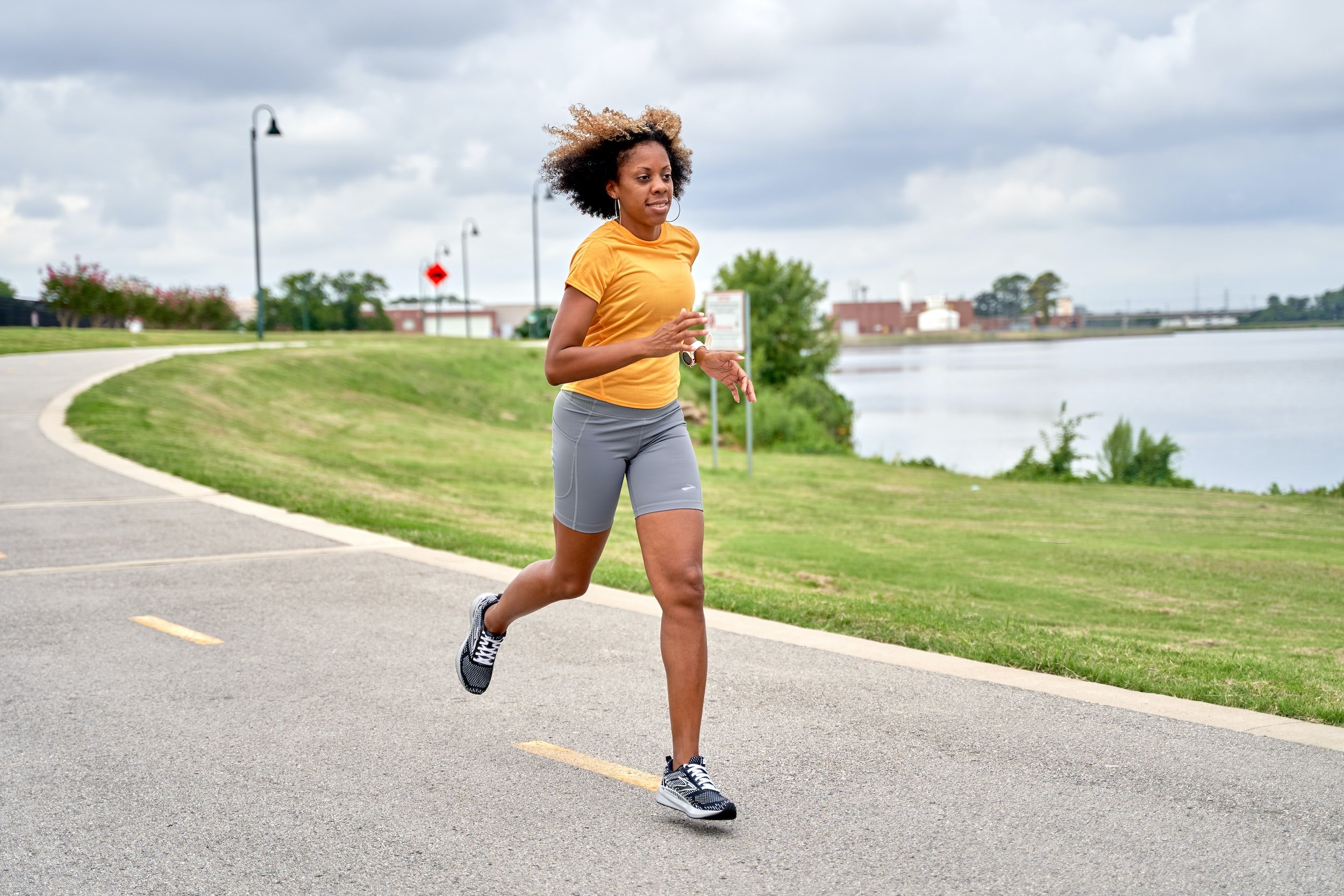
Running is a high-impact activity requiring core strength and function. To manage the intra-abdominal pressure that stabilizes your body during running, your abdominal and pelvic floor muscles need to be strong and functional. These muscles are weakened during pregnancy and can be further impacted during labor and delivery (cesarean and vaginal). Therefore, incontinence and prolapse can be a concern in postpartum running. You have to allow yourself enough time to heal and strengthen. How will you know if you have pelvic floor or abdominal wall issues? The following is a list of symptoms that could indicate dysfunction and should be addressed with a pelvic floor physical therapist before running.
Urinary and/or fecal incontinence
Urinary and/or fecal urgency
Heaviness/pressure/bulging in the pelvic area
Pain with intercourse
Separated abdominal muscles and/or decreased abdominal strength and function
Low back/pelvic pain
Based on evidence, these experts state that return to running is not advised prior to 3-6 months postpartum or beyond if any symptoms of pelvic floor dysfunction are experienced before running or after attempting to run. Furthermore, even if you don’t have symptoms, 3-6 months is still a minimum guideline to allow your tissue and muscles time to heal and strengthen. For example, it’s been found that after a c-section, your abdominal wall has only regained 51% of its tensile strength by 6 weeks postpartum, and reaches 73-93% only at 6-7 months postpartum.
After (or while) addressing any pelvic floor and/or abdominal concerns, it’s time for you to focus on building overall strength, with a focus on the core and lower body (I recommend glutes for all moms!). Stronger muscles will allow you to better manage the load/demand running puts on your body. If you’re able to work with a qualified postpartum exercise professional they can lead you through the proper training progression. When I work with people I start with making sure all of the muscles that attach to the pelvis are strong, functional, and know how to work together. I then move on to bigger movement patterns like squats, hinges, and lunges. The guidelines referred to in this article use the following exercises to assess readiness to run:

Walking 30 minutes
Single leg balance 10 seconds
Single leg squat 10 repetitions each side
Jog on the spot 1 minute
Forward bounds 10 repetitions
Hop in place 10 repetitions each leg
Single leg ‘running man’10 repetitions each side
Single leg calf raise 20x
Single leg bridge 20x
Single leg sit to stand 20x
Side lying abduction 20x
Keep in mind that this is not a prescriptive list, but it gives you an idea of what you should be working toward. You want to be able to do these exercises (or exercises that require similar load and strength) without pain or incontinence before returning to running.
So mama, before you break out the running shoes (which by the way, make sure they support your new postpartum feet), take the time to heal, strengthen, and get assessed by a pelvic floor PT if you have access to one. You have your entire life to be active (with your children!) and you don’t want to have any setbacks…so remember progression is essential.
And PS. This article doesn’t account for other factors like sleep, scar tissue, weight, breathing, breast size/breastfeeding, jogging strollers, or emotional readiness, which all will factor into your readiness and ability to run.
Ready for more tips? Download 5 Tips for a Stronger Core After Pregnancy.
If you are experiencing back pain or leaking, consider this FREE 5-day course to gain a better understanding of how to reduce your risk for pain and incontinence.

11 Ways to Keep Your School Age Child Active
It is challenging when your child is really young to find and make time to workout, especially at home and without interruption. I always tell new moms that all of the effort they put in early to prioritize exercise will pay off as their child gets older. However, now that my daughter is older, I realize that the effort doesn’t stop…it just looks different. Here are some things that have worked well for me since she’s become a physically active school-age child.
I tend to get a little nostalgic as my daughter’s birthday comes around. This January she turned 8! I of course scrolled into the abyss of my camera roll to admire how she has changed over the years. One thing that stood out to me is how active she has always been, and how I do different things to facilitate that as she’s gotten older.
It is challenging when your child is really young to find and make time to work out, especially at home and without interruption. I always tell new moms that all of the effort they put in early to prioritize exercise will pay off as their child gets older. However, now that my daughter is older, I realize that the effort doesn’t stop…it just looks different. Here are some things that have worked well for me since she’s become a physically active school-age child.

Continue to prioritize your own exercise, especially home workouts. I now look forward to being a role model and doing my weekend workouts at home. They’re usually shorter, which is perfect because sometimes my daughter will join in. At the very least, she sees me making time for activity.
Teach them how their body works and how physical activity helps it work better. I never miss an opportunity to educate my daughter about her body. How many of us had no idea what the pelvic floor was until we were pregnant? I encourage her to notice how her heart rate gets faster when she runs or teach her about the muscles that need to be strong for the monkey bars.
Give active toys for rewards or gifts. It’s pretty hard to encourage your child to be active when you just gave them a brand-new tablet for their birthday. Instead consider things like scooters, inline skates, hula hoops, and jump ropes. It’s not that I don’t give sedentary gifts, but I make sure she has active options that are just as fun.
Talk about their strength and ability more than their body type. My daughter is tall and lean, and she’s constantly hearing comments about it. That’s not necessarily a bad thing, but I like to take the focus off of her physical appearance and compliment her on how strong her legs are when she runs, or how I’m lucky she is strong enough to help me carry groceries up the stairs.
Let them jump around from activity to activity without specializing. Most elite athletes were multi-sport athletes as a child. Now days there is pressure for your child to specialize in a sport at an early age, and if it’s driven by them by all means support it. But, just as their taste in food fluctuates almost daily, so can their interests. I try to support all of the sports and activities my daughter wants to try…even if she quits after one session or season. How else will she find what she loves or is good at? There’s plenty of time later to instill commitment once you start something, but let them explore when they’re young.
Walk as part of the commute. I admit, I used to be a lot better at this. We never seem to have enough time to walk to school versus drive. But I do purposefully make sure to include her in any errands I can do on foot. I want her to realize that moving often is a way of daily life.
Choose sneakers. Have you ever tried to run in “dress shoes”, or jump rope in boots? Although it can be cute to see your child in a variety of shoes, remember kids are supposed to be active, and their footwear should encourage that. Have fun with different colors and styles, but keep your child in comfortable shoes.
Choose physically active family time. This might seem simple, but as most kids get older, it becomes a little harder to get them to participate in activities with you. I’ve tried to follow her lead as much as possible to make it a bit easier. She started tennis lessons so I did as well. She likes to swim (I do not), but I make sure we go to the pools. I bought us both a pair of rollerblades so we could enjoy it together. There was a stage where I was relieved to be able to sit on the park bench while she played on the playground but to promote lifestyle activities, I’m back to moving with her again.
Plan active birthday parties. Last year we planned a skate party and this year her celebration consisted of dancing and cartwheels at home. Your child already has a positive association with their birthday, so why not make the positive connection between celebrating/special days and being active? Fortunately, Philly has a ton of active party options (if I have to go to another trampoline park!), but walking to your favorite restaurant, or dancing to the birthday song are also simple things you can do to connect celebration with movement.
Applaud them for being a good example to other kids. Just as we admire moms who are able to stay consistent with exercise, or manage to stay strong during pregnancy, kids take note of other kids’ abilities. Let your child know that they’re being a good example for others with their exercise and activity. My daughter has seen me help other people be active and she often talks about teaching kids how to do different “moves” and “tricks” on the playground.
Teach them new skills. As you already know, kids are sponges and they love to mimic us. We spend a lot of time focusing on teaching them academics and manners, but are you taking the time to expose them to different motor skills and movements? Sure they have P.E. class, but a little practice outside of school goes a long way in building their confidence in physical activity.
Nobody knows your child better than you, so I encourage you to try these suggestions or do what works for your family. Either way, if you want your child to remain active, we have to create an environment that supports it. If you’re struggling with modeling. it, I invite you to join the Active Mom community with private or group training.

Will You Have Better Success Setting Goals or Intentions?
Personally I use goal setting in many areas of life, but when it comes to resolutions in the new year, I've found more success by setting intentions. If you're feeling motivated to kick off 2023 with some changes, let's see what might be the best approach for you...and your next steps.
To be honest, one thing I love about working with moms is there doesn't tend to be the same influx of aggressive January goals (with unsustainable plans to achieve them) that are common in traditional fitness settings. Moms are exercising for healthy pregnancies, postpartum recoveries, injury prevention, mental health, and to be role models to their families. These are sustainable, year-round goals that don't require an extra push in the New Year.
However, with that said, there is nothing wrong with feeling a little extra motivated going into January. Personally I use goal setting in many areas of life, but when it comes to resolutions in the new year, I've found more success by setting intentions. If you're feeling motivated to kick off 2023 with some changes, let's see what might be the best approach for you...and your next steps.
What is a goal? A goal is a desired result. It's something measurable to achieve

What is an intention? An intention is a guiding principle. It's more about the way you want to live or show up.
When to set goals? If you have something very specific you want to accomplish, in a set amount of time then goals are really helpful.
When to set intentions? If there isn't a specific result you can/want to measure, an intention can help you align your decisions, actions, and thoughts throughout the day/month, or year.
Where to start with goal setting? SMART goals are the most common framework, but there are other helpful tips when it comes to fitness goals. If you work best with a plan of action, then setting out a measurable, actionable, realistic, and timely plan to achieve your goals is your next step. If you're working with me and it's exercise-related, please let me help you with this! An example might be "be able to run at 6 months postpartum with no pain".
Where to start with setting intentions? Make sure your intention or mantra is positive and simple. Your intention should be something that you can keep in the forefront of your mind daily. You don't need a specific plan, rather you try to align your thoughts and behaviors with it. An example might be "move more".
Wishing you much success!