
Active Mom Insights
Blog posts by Ashley Reid
Prenatal Exercise: Your Power in Your Pregnancy
What if I told you the power you have over your pregnancy lies heavily in exercise? Or that one of the first important decisions regarding the health of you and your baby is about how much you move? What if instead of looking at it as a chore or something feared, we embraced exercise as the powerful tool it is? Hear me out...
What if I told you the power you have over your pregnancy lies heavily in exercise? Or that one of the first important decisions regarding the health of you and your baby is about how much you move? What if instead of looking at it as a chore or something feared, we embraced exercise as the powerful tool it is? Hear me out...
Awareness around the importance of prenatal exercise is increasing, and moms-to-be are encouraged more than ever before to stay active during pregnancy. Gone are the days where you hear, “put your feet up, you’re pregnant”, or that you shouldn’t start an exercise program if you weren’t exercising pre-pregnancy. Health and Exercise organizations like the American College of Sports Medicine clearly state that in most adults the benefits of exercise far outweigh the risks.

In fact, the American College of Obstetricians and Gynecologists have identified the following benefits associated with prenatal exercise:
Higher incidence of:
vaginal deliveries
Quicker postpartum recovery
Lower incidence of:
excessive weight gain
gestational diabetes
Preeclampsia (one of the most preventable causes of maternal death)
preterm birth
low birth weight babies
Let’s not forget about mental health benefits, with moms having reduced risk of prenatal anxiety and depression. If you have an uncomplicated pregnancy, it’s time to embrace moving more.
Exercise is your power during pregnancy. The 2020 ACSM guidelines recommend accumulating 150 minutes of moderate physical activity each week. If you’re new to exercise, don’t get caught up in the numbers, take the simple approach to prenatal exercise. If you prefer structure, make a plan and stick to it. Either way, exercise is meant to benefit your health and shouldn’t be a source of stress, so try this uncomplicated approach:

Walk for aerobic exercise: It can be as simple as going for short walks whenever you can and longer ones when you feel good. Consider just taking an extra 5-minute walk after parking your car at your destination. If you prefer structure, commit to a 30-minute walk every day after dinner.
Address muscle stiffness: Again, it can be as simple as recognizing where you’re feeling tight and committing to moving and stretching those areas between meetings or when you wake in the morning. You can also follow something more structured like a prenatal yoga routine. Keep in mind you may feel more stiff due to fluid retention so other strategies beyond moving could be helpful.
Strength training is key. It’s still possible to take an uncomplicated approach, but this is an area where you want to be intentional, aiming for two strength sessions per week. You can perform bodyweight exercises or use equipment like dumbbells, bands, or suspension trainers. If you’re new to exercise or short on energy and time, start with the muscles most impacted by pregnancy: core (diaphragm to the pelvic floor), glutes, and upper back/shoulders. Again, if you prefer structure, follow a full body strength routine that’s designed for pregnancy. It’s true many people can continue with their pre-pregnancy routine, but your body has new needs so to make the most of your routine, it makes sense to train to meet those changes.
Learn how to engage your pelvic floor: The simple approach is what you’ll usually find in a Google search, to kegel when you’re brushing your teeth or sitting in the car. For a more integrative approach, you can incorporate pelvic floor training into your strength routine by using breath and intentional contractions during specific exercises. Either way, remember relaxing the muscle is just as important as contracting.
In my experience as an Exercise Physiologist working with pregnant and postpartum moms, strength training is where people get held up, specifically core training. It’s usually a matter of not knowing what’s safe or what’s the most beneficial. There are no “best exercises for pregnancy” which is why it can be confusing. You really have to find what’s right for you.
If I had to give you one general tip it would be: learn how to engage your transverse abdominis muscles with breath. These are your stabilizing muscles and you can draw on their support during exercise. Being able to engage these muscles is also a good indicator on whether an abdominal exercise is appropriate for you. The question of planks often comes up during pregnancy. If you’re able to hold the tension in your abs, while continuing to breathe, without any bulging or doming in your abdomen or feeling pressure in your pelvic floor, then the exercise is probably a safe choice. Crunches and sit-ups are the only absolute “no”.
Other tips if you choose the power of prenatal exercise include:
Drink plenty of water
Eat
Wear supportive shoes and bras (so important for posture and pain)
Avoid risky activities (risk of impact to your belly or falling)
Avoid overheating (exercising in a hot environment, and wearing breathable clothes)
Lastly, keep in mind there is no one-size-fits-all all approach. Exercise should make you feel good. It should make you feel empowered. Choose what’s best for you and your baby. If you have access to a fitness professional specializing in prenatal exercise, I highly recommend consulting for a personalized program.
If you’re looking for a simple way to get started, try this download for 5 Tips for a Stronger Core During Pregnancy.
*This was an original blog post for MommiNation.

Quiz: How Important is Fitness to You During the Holidays?
Schedule irregularity, emotions/stress at a high level, guilt about nutritional choices, priority shifts...the holidays can derail your fitness. The truth is that for most of us, the period from the end of November to January looks different than your life right now. And before you even continue reading, I'd like you to ask yourself...how important is your fitness during the 5-6 weeks of the holiday season?
Schedule irregularity, emotions/stress at a high level, guilt about nutritional choices, priority shifts...the holidays can derail your fitness. The truth is that for most of us, the period from the end of November to January looks different than your life right now.
And before you even continue reading, I'd like you to ask yourself...how important is your fitness during the 5-6 weeks of the holiday season? Seriously, would you say:
VERY IMPORTANT
MODERATELY IMPORTANT
NOT IMPORTANT AT ALL
Once you have your answer, skip to the appropriate section for my suggestions. This is a no judgment zone, do what works for you.

VERY IMPORTANT

This is usually the choice if you've been making progress, you feel better when you exercise, you don't want to disrupt your routine or feel like you have to "get back on track". And in that case, it absolutely makes sense to create a plan so that you can enjoy the holidays while keeping up with exercise. Here are my suggestions:
Make physical activity part of your tradition. Plan a pre-dinner walk or jog, go ice skating, do a 12 days of fitness challenge or turkey trot (virtual 5K).
Be an early riser! Even if you don't normally workout in the mornings, commit to AM workouts. There will be less chance of something getting in the way and it will give you time to enjoy the evenings with your family.
Pick a focus. If you're seeing a lot of progress in one area of fitness, let that be your priority and give yourself some grace in the other areas. Example: make strength training a priority and maybe bike a little less or vice versa.
Commit: schedule and pay ahead of time for any classes, training or activities you'd like to stick with. Example: Purchase ice skating tickets, schedule with your personal trainer, put workouts in your calendar.
MODERATELY IMPORTANT
This is usually the choice if you've been pretty consistent with fitness and based on past experience know that a little less consistency during the holidays won't break you. You're the type of person that can get back on track pretty quickly. You probably like to balance fitness and indulging a bit. Here are my suggestions:
Plan to be flexible. Rather than planning workouts for specific days of the week, plan ahead for the type of workouts you like to complete. Example: 2 strength workouts within the week. That way you can fit them in when you have time and not feel guilty if you miss a "Monday workout".
Choose less intense workouts. If you tend to feel a little more laid back about fitness during the holiday you're probably less likely to want to go all out. Aim for shorter duration and less sweaty.
Be OK with maintenance. Give yourself some grace that you might not see any gains and that's OK. Your goal is to maintain and not self-sabotage.
NOT IMPORTANT
This is usually the choice if A) you're not consistent now so why start during the holidays B) trying to fit in exercise feels stressful C) You've been working so hard, you're OK with giving yourself a break...you're also confident that you can get back on track quickly. Here are my suggestions:

Choose a new activity or workout. Make it as a treat or form of self care. Get completely out of your normal routine and make it something you'll look forward to. Set something up just once per week.
Keep moving. Although formal workouts might not be your thing during the holidays, aim to get in lots of walking, dancing or activities like hiking, skiing or sledding with your family.
Don't completely rule it out. There may be days that you do feel like a good workout. Don't decide on weeks of inactivity because that's just not healthy. Have a go-to workout on hand for days you have the time.
Have a plan to begin again in January. Book classes, activities or training sessions now so that you're all set when the holidays end! It’s not getting off track if it’s in the plan.
If you're looking for a workout that:
You can keep on-hand to do when you feel like it
Is flexible and can be done anytime
Helps you commit to fitness during the holidays
Sign up for a one month Core, Function & Fitness training plan, which include 3 strength workouts and 2 core workouts. Free trial and cancel anytime! Prenatal plan available!

7 Best Ways to Balance Family and Fitness
Is there such a thing as balance when it comes to fitness and family? Finding time for fitness has always been a non-negotiable for me. I need to exercise just as much as I need my daughter to understand the importance of exercise. It doesn’t mean it’s always easy, but it’s definitely doable if you want it to be.
Is there such a thing as balance when it comes to fitness and family?
Finding time for fitness has always been a non-negotiable for me. I need to exercise just as much as I need my daughter to understand the importance of exercise. It doesn’t mean it’s always easy, but it’s definitely doable if you want it to be. Here are some tips from me and Erin, who has 10 and 14-year-old boys.
1.Start early. Like with any habit, the more times it’s done the easier it becomes and the more accepted it is. At first, it may feel impossible to workout with a baby or toddler around, but don’t give up. Eventually, your kids will come to expect it and they’ll realize their efforts to demand your attention during that time will fail. If you’re starting when they are a bit older, make the transition easier by inviting them to participate or starting with shorter durations of time. If you’re starting young, try outdoor workouts first. Kids love being outdoors and will be distracted by the environment which means less work for you.

2.Find activities you can do together as a family. This serves several purposes: A) It allows you to burn calories and workout without mom guilt. B) It creates memories of time spent together. C) It helps the whole family relieve stress and improve health. D) It shows your family the importance of caring for your body through movement. E) An added bonus is finding new things to do as your kids get older (think going from pushing them in a jogging stroller while you run to mountain biking together on vacation).
3.Have a plan B. Not everyone enjoys working out at home or alone, but if you have a family sometimes that’s the only way to stay consistent. This doesn’t mean it has to be your primary source of exercise, but having a go-to fitness routine when schedules change, kids get sick, or the day gets away from you is crucial.
Get off your phone! How often do you go to an activity for your kids or the park and just sit and scroll. That’s precious time! Make a plan to be active. Get comfortable with a quick workout during soccer practice or playground time. Your kids are moving, why shouldn’t you?
Be flexible. You might not get the room to yourself for home workouts...exercise anyway. Kids, pets, partners...let them watch, participate (or challenge you with distractions), but don’t let that be your reason not to workout.
Book the time on your calendar (and the family calendar if you have one) and honor it! Workouts shouldn’t be the first thing cancelled alllll of the time. Sure things will come up, but treat that time as though it is a lunch with a best friend or a critical work meeting with your most important client. If you have a consistent schedule, book for the same time each week for a month in advance. If not, aim to schedule your fitness on a weekly basis.
Ask for help. Exercise is essential for good health (this is a fact, not an opinion). Moms have a hard time asking for help. We think we need to justify ourselves. We think we need to manage it all. If we can get past that mindset we would be a lot healthier. Fitness is a great reason to ask for help. Let’s stop feeling guilty about it.
The truth is balance in any area of life may not truly exist, but priorities do. It’s fine if fitness isn’t in your top 3-5 priorities, but if it is, YOU CAN and will make it work. It’s true I may not have time for other things if I’m prioritizing exercise (tv, sitting down for lunch, cooking dinner every night), but I’m OK with that, because I feel like I am balancing fitness and family (most of the time!).
Erin has found success by choosing virtual strength sessions and the monthly membership program. Let me know if I can help you find your fitness while balancing your family!
Advice on Prenatal Exercise: 3 Tips to Achieve 40 Weeks of Workouts
I’ve collaborated with two mamas-to-be to provide you with their advice on exercise during pregnancy. I’ve worked with both Shannon and Jen for 40 weeks of prenatal workouts. So consider these 3 tips you approach exercise each trimester.
Tip 1 from Shannon: Consistency is key. Consistent exercise feels better physically, but just as important, consistency will help you overcome that guilty pressure of needing to “get back on track”. Even if you can’t do much, do something to stay consistent. This could be a 40 minute workout, it could be a 5 minute walk. Either way check that box and get it done.
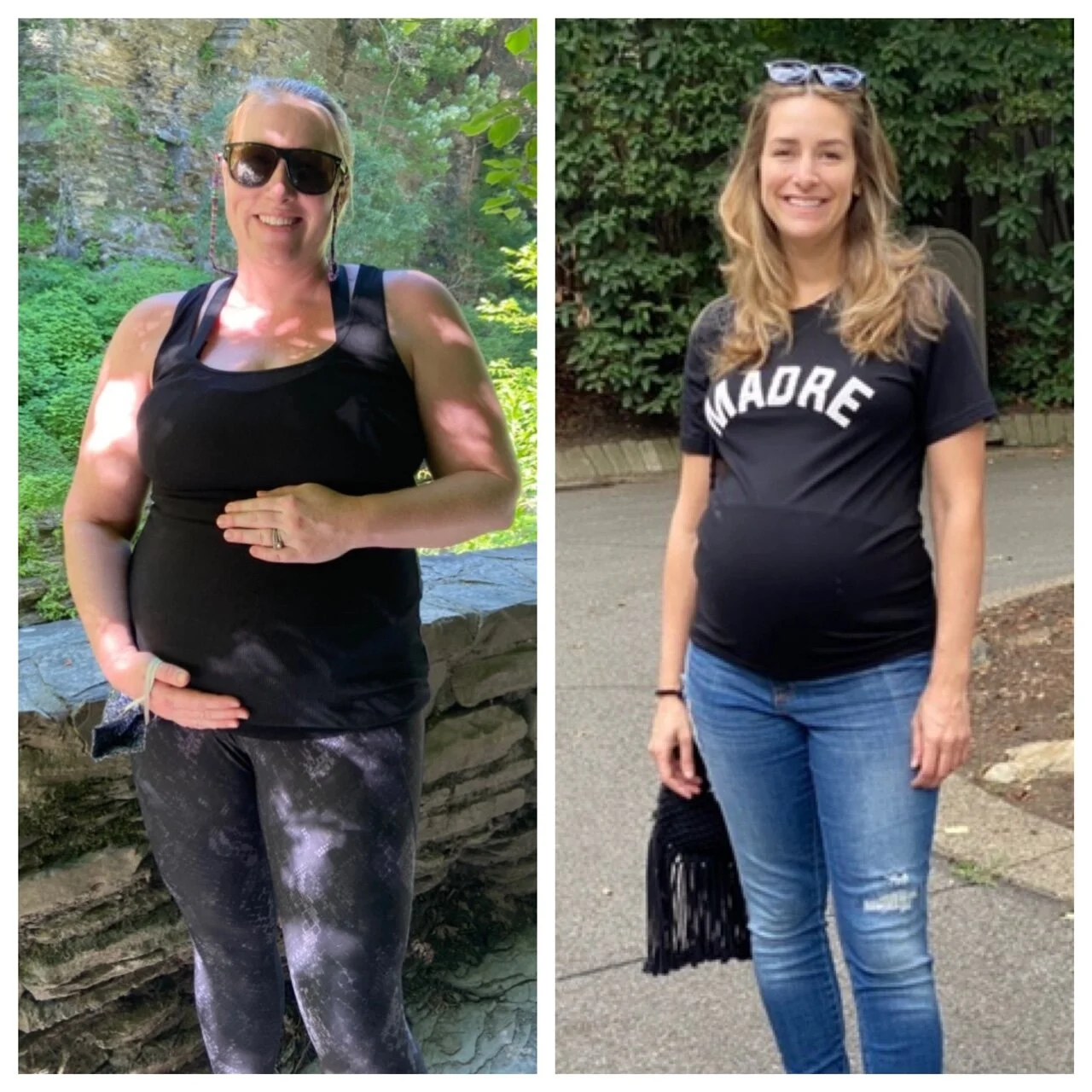
Jen and Shannon
Tip 2 from Jen: Build a relationship with your trainer. This is a great point. Any fitness professional experienced in prenatal exercise will do their due diligence to ask you about your experience, complications, history, etc. You don’t want to have to catch every new instructor up, or worse, not have them understand your strengths and weaknesses. You’ll receive better workouts and your trainer will feel more confident challenging you if you’ve built a relationship. Jen adds, “I have a constant connection with Ashley so I am more aware of how hard to push myself and/or to know what to look out for! Ashley keeps me updated as to what to watch out for if certain pains pop up. This enables me to continue my training with confidence.
Tip 3 from Shannon: Be kind to yourself. “You never know what kind of day you are going to have. Energy flow fluctuates so much throughout different trimesters and can change daily. At a certain point, your body just grows and changes and things you used to be able to do, you just can’t do. I’ve also cut back slightly on how frequently I workout as I get closer to the end, which is okay. I’m still making the time as my body feels it can. I agree with Shannon. For some the hardest part of prenatal exercise is mental. You want to challenge yourself, but you don’t want to be rigid in your goals. With hormones shifting and your body physically changing, your mentally have to be flexible and try to be OK with adapting as needed.
If you’re pregnant and ready to get started, check out 5 Tips for a Stronger Core During Pregnancy.
Ashley Reid is an exercise physiologist with the only strength-based studio for moms and moms-to-be in Philadelphia.