
Active Mom Insights
Blog posts by Ashley Reid

When to Start Prenatal Exercise
The short answer: Right away!
But this also depends on what you consider prenatal exercise. Gone are the days where it has to be gentle stretching (although it could be if that’s what you need).
The short answer: Right away!
But this also depends on what you consider prenatal exercise. Gone are the days when it has to be gentle stretching (although it could be if that’s what you need). In fact, if you watch this video from Nike, you’ll probably feel pretty badass and realize prenatal exercise is going to prepare you for the athletic event that is pregnancy and labor and delivery….a marathon combined with intense sprints.

Prenatal exercise means your training program is designed for the pregnant body. You don’t have to follow a specific set of rules for each trimester. Exercise selection isn’t dictated by the number of weeks you are. A really good prenatal program, simply means you’re going to attempt to put your body in the best position to deal with the demands of pregnancy and motherhood.
Very early in your pregnancy, you may find that prenatal exercise means:

less intensity because you’re extremely fatigued
learning how to engage deep abdominal while it's still fairly easy to feel them
beginning to strengthen pelvic floor muscles
finding a prenatal exercise specialist to keep you motivated through every trimester
addressing muscle weakness or tightness that might become an issue later in pregnancy
Later in your pregnancy, prenatal exercise might mean:
finding new ways to strengthen the core without creating too much abdominal pressure
reducing impact exercise because it's uncomfortable or your pelvic floor can withstand the load
calming exercise to help keep your stress low
making adjustments like switching from pull-ups to rows or floor push-ups to wall push-ups
The above are just examples. Your prenatal program should be based on how you’re feeling, your current fitness level and what you enjoy doing. The earlier you can prep your body for the sport of motherhood, the better.
If you’re ready to start with something simple, download 5 Tips to a Stronger Core During Pregnancy.

Mom Posture: Why Are My Shoulders Rounded?
Catch a side view of yourself in the mirror and you might notice that your ears are slightly forward of your shoulders or that your neck is curved. It may look like you’re slouching even when standing tall, or that you have “winged scapula”. During exercise you might notice your shoulders shrug during pushing or pulling. You may have experienced a shoulder injury from instability, or suffer from headaches. You might even feel your breathing is inefficient.

Catch a side view of yourself in the mirror and you might notice that your ears are slightly forward of your shoulders or that your neck is curved. It may look like you’re slouching even when standing tall, or that you have a “winged scapula”. During exercise, you might notice your shoulders shrug during pushing or pulling. You may have experienced a shoulder injury from instability, or suffer from headaches. You might even feel your breathing is inefficient.
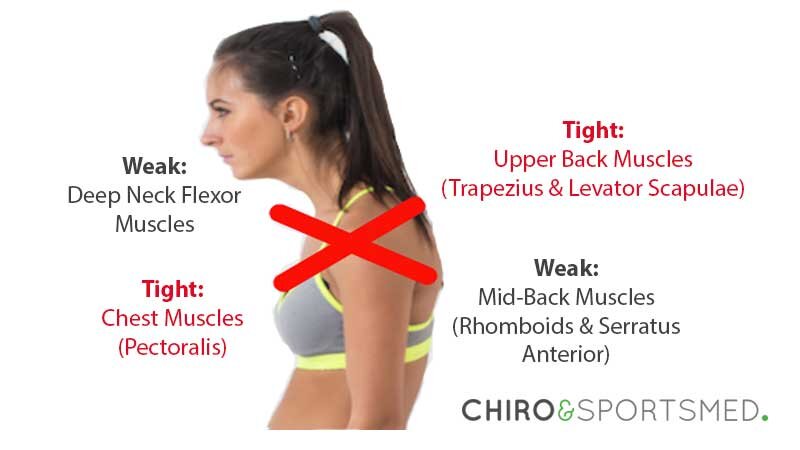
Well guess what? There is a name for that. It’s called Upper Cross Syndrome due to the X you can draw between tight and lengthened muscles in your upper body. And although it’s common among moms, we can’t just blame the kids (although heavier breasts from pregnancy or breastfeeding can contribute). Upper Cross Syndrome affects anyone that is spending extended periods of time with your head forward (think phones and computers). Put simply there is increased stress on your neck and shoulders, which can cause some muscles to be too tight and some muscles to be weak and lengthened.
The good news is that it can be improved or corrected. Here are some starting points:
Daily Life: Determine the positions during the day that are causing your upper cross syndrome and then reduce time in those positions. Feeding the baby? Change up the position. Working on your computer? Use a chair with good lumbar support, ensure the proper height of the keyboard, and take movement breaks. Moms, the daily stuff really adds up, so these small changes can have a huge impact! *Side note, consider your bra. If it’s not supportive, your breast can be pulling you forward.
Lengthen: Free up the shortened muscles that are pulling you forward. Muscles like the upper trapezius, levator scapulae, and pecs (upper back and chest) can be lengthened through dynamic and static stretching, as well as using tools like a tennis ball or foam roller. A doorway chest stretch and some upper back foam rolling is a great place to start. Stretches like ear to shoulder while also tilting your chin toward your shoulder are helpful as well.
Strengthen: Your rhomboids, serratus anterior, and lower traps (mid back), as well as your neck flexors, are probably lengthened and weak. Exercises such as standing or floor Y-raises, and chin tucks are a simple place to start.
So what do you say mama, are you ready to address what has always just been called poor posture? Find a program that works for you!