
Active Mom Insights
Blog posts by Ashley Reid

Exercise Better Than Dieting for Belly Fat Loss
Belly fat is something many of us struggle with, especially after pregnancy and going into menopause. The fat stored during pregnancy and the change in estrogen is responsible for fat distribution to your abdomen. And while watching what you eat is essential, a recent research review shows exercise may be even more effective for specifically targeting visceral fat. Visceral fat is the fat that wraps around organs deep in your abdomen. This type of fat increases your risks for things like heart disease and diabetes. So losing it is good for your health.
Belly fat is something many of us struggle with, especially after pregnancy and going into menopause. The fat stored during pregnancy and the change in estrogen is responsible for fat distribution to your abdomen. And while watching what you eat is essential, a recent research review shows exercise may be even more effective for specifically targeting visceral fat. Visceral fat is the fat that wraps around organs deep in your abdomen. This type of fat increases your risks for things like heart disease and diabetes. So losing it is good for your health.
Photo by Andres Ayrton:
In a recent research review, researchers compared how well exercise versus cutting calories reduced visceral fat in people with overweight or obesity. Researchers looked at data from 40 different studies with over 2,190 participants. Some people dieted, some exercised, and some did neither. Everyone who dieted or exercised lost visceral fat. The results showed that ONLY the exercise groups showed a dose response, where increasing exercise meant more visceral fat loss. Cutting calories did reduce visceral fat, but diet didn’t show the same dose effect. Eating fewer calories didn’t necessarily equal more fat loss. So in this case, more exercise was better than further calorie restriction.
Exercise causes fat loss via an increase in energy expenditure, while caloric restriction results in fat loss via a decrease in energy intake. Researchers theorize the results can be attributed to exercise preserving muscle while dieting alone possibly causing muscle (lean mass) loss. More muscle means you’re burning more calories at rest, so you definitely don’t want to lose muscle while attempting to rid the postpartum belly fat.
Why This Matters for Moms
Early postpartum before you’re able to do vigorous exercise, nutrition and calorie reduction might be your best tool for losing some of the stored abdominal fat from pregnancy. But, be sure to keep in mind:
adequate protein is important to prevent muscle loss (mom butt)
there are increased calorie requirements while breastfeeding, and the energy and nutrients needed for tissue healing come from a healthy diet
When you’re able to safely return to physical activity, exercise will be an important part of your fat loss plan. Rather than continuing to cut calories, you’ll increase your exercise.
Another perspective is that yes, your body does need to accumulate fat during pregnancy, but maintaining a healthy weight and not gaining excess visceral fat is also important. So more points for prenatal exercise during pregnancy!
The Takeaway
If your mommy pooch concerns you, focus on both your diet and physical activity. To better your chances of losing the fat around your abdomen, make sure that exercise is a part of your program. If the researchers’ theory is correct and losing muscle mass is responsible for the dose-effect difference between diet and exercise, make sure strength training is the foundation of your fitness program. Lastly, keep in mind that this research review was conducted on overweight and obese individuals, but did not specify if any of the participants were early postpartum or approaching menopause.

Feeling Overwhelmed When You Think About Returning to Fitness?
Why does beginning an exercise program after having a baby feel so difficult? The answer is that there are many real challenges for new moms.
As we all know exercise has many physical and mental health benefits. We all are also probably somewhat familiar with exercise guidelines and recommendations. So why does beginning an exercise program after having a baby feel so difficult? The answer is that there are many real challenges for new moms. Being a military mom adds another layer of barriers and stressors. Sleep deprivation, lack of time, changed priorities, minimal support from family, fear, birth complications, pain, lack of postpartum exercise and healthcare resources, and pressure to lose weight and perform, are all very real barriers (not excuses!). Although every mom’s journey back to exercise will be different, these three general strategies can make your return to exercise a little less overwhelming.

1) Understanding Changes to Your Body: Having information and knowledge about the anatomical and physiological changes during and after pregnancy will validate why you feel weaker despite exercising during pregnancy, or why you can’t seem to lose the last five pounds, or why you’re experiencing soreness like you never have before. Understanding how the changes to your body impacts fitness is essential, yet most postpartum care doesn’t include such information. Having this understanding will help you make sense of why workouts feel so difficult, why you’re not seeing progress at the rate you’re used to, and hopefully allow yourself some grace during those first few months after having your baby.
There could be an entire book about this, but hormones play a huge role in muscle development and exercise recovery. Hormones don’t stabilize immediately after giving birth, and even when they begin to “balance out”, other hormones due to lack of sleep and stress can keep your hormones at levels that will impact your ability to lose weight, workout at higher intensities, and recover after a workout. Additionally, hormones can have an impact on your mood, affecting your motivation to exercise and desire to hit the gym like you used to. If you’re breastfeeding, you’ll have an even longer delay of hormones getting back to pre-pregnancy levels, so having the understanding that breastfeeding doesn’t automatically make it easier to change your body composition due to so many other factors, is also really important.
In addition to hormones, you need to have an understanding of tissue healing. You may be feeling stronger and ready for more physical activity, but whether you’ve had a vaginal delivery or c-section, your abdominal wall and pelvic floor tissues can take 9-12 months to fully heal and regain strength. Having this understanding is important so that you’re not choosing exercises that will do more harm than good, hence stunting your progress and inhibiting fitness results. Exercise is important in healing, but not over stressing the tissues is crucial in progressively increasing strength and function. This means if running feels overwhelming, that’s OK. Recent guidelines suggest that running and other high impact activity shouldn’t even happen until at least 12 weeks postpartum, and after proper strength training.
Hormones, tissue healing, and other factors don’t mean that you can’t exercise, in fact you absolutely should. Those factors also don’t mean that you won’t see results. What those changes to your body do mean is that you shouldn’t expect to exercise at your same pre-pregnancy level right away, and that initially, your program will probably need to look different. Having this understanding about the changes to your body means you’ll be able to gradually progress in fitness. As long as you’re moving forward with no setbacks, you’ll get there.
2) Prioritize: Being able to prioritize will help ease some of the pressure and stress around exercising. You’re probably used to thinking of fitness as aerobic, strength, and flexibility. And you’re correct, these are all major components of fitness. However, as a new mom it’s important that you make the most of your time and energy. To set yourself up for success, you should prioritize the type of workouts and exercises you’re choosing. Your first priority should be on healing. This includes any tears, incisions, scarring and any emotional trauma, depression, or anxiety. So if you once prioritized high intensity cardio and heavy weights, you’ll need a mental shift to feel good about the workouts your body needs. Next you should prioritize core strength and function, specifically addressing any concerns for abdominal separation, back pain, or pelvic floor dysfunction (pain or incontinence). Next make sure you’re functional. Functional strength training is somewhat of a trendy term, but for moms it means that you can perform all of your daily movements and demands of caring for a baby without pain. As it relates to exercise, it means you have mastered all of the major movement patterns (squat, lunge, hinge, push, pull, rotate/anti rotation) with good technique, and ability to recover. Your last priority is progressing to more vigorous physical activity and your traditional fitness goals. After you have the foundation of core strength and functional movements, you should be able to advance comfortably and with reduced injury risk. This is a simplified progression, but I like to think of Core, Function and Fitness as a pie chart with different percentages. You’ll always be working on all parts, but the percentage of each will change based on your priorities and needs.
3) Mental Shift: This has been touched on a bit already, but the first step in returning to exercise is mental. The fitness requirements of the military are relevant, but this comes secondary to how you view postpartum physical activity, especially now that you have a year to meet your military fitness and body composition goals. Your body has changed so your workouts will and should as well. The goals you once set were for a different body. Exercise should be a tool and if you begin to look at it that way, you will choose and plan your workouts differently, and with less stress. During the first few months, what type of exercise will help you heal? What type of exercise can you do without childcare? What workouts are realistic with the time you have? If you’re not sleeping, when is the best time of day to exercise and the appropriate intensity? Shifting your perspective about fitness and exercise is not a sign of weakness, but rather a helpful and smart tactic.
Now that you have those three general strategies to help you overcome the numerous barriers you face as a mom returning to exercise, I want to make it very clear that being a mom does not have to negatively impact your fitness. Moms actually have an advantage when it comes to fitness. By training in a very specific way and a way that you’ve never trained before, you have the ability to have a stronger core, be more functional, and feel stronger than you’ve ever been. Why? Because now your training will probably include pelvic floor muscles and breathing techniques, making your core function optimally. By caring for a baby, you’ll probably need to address posture, aches, and pains caused by muscle weaknesses/tightness, that you just ignored before. Your workouts as a mom will now have more meaning and serve many more purposes. If you can understand what your body needs, prioritize the proper exercise progression, and change your mindset, you will feel strong and confident in your body again.
Looking for a little more guidance? Take this Free Self-Assessment.

How Can You Find Time For Exercise in Your Busy Mom Life?
Running a business, grocery shopping, making dinner, cleaning the house, spending quality time with my daughter, making time to catch up with friends, attending birthdays and weddings, sleep...where do I find time to workout? The answer is I don't "find" the time, I "make" the time. If your life as a mom is anything like I just described, then you most likely will never "find" time either. This however, doesn't make working out impossible, and doesn't mean you should skip exercise until your schedule is "less crazy". What it means is that you're going to have to shift your mentality, and use some strategy to make physical activity a constant in your busy mom life. Exercise is not a luxury. Physical activity is essential for your mental and physical health so let's take a look at some tips that will help you "make" time for exercise.
Running a business, grocery shopping, making dinner, cleaning the house, spending quality time with my daughter, making time to catch up with friends, attending birthdays and weddings, sleep...where do I find time to workout? The answer is I don't "find" the time, I "make" the time. If your life as a mom is anything like I just described, then you most likely will never "find" time either. This however, doesn't make working out impossible, and doesn't mean you should skip exercise until your schedule is "less crazy". What it means is that you're going to have to shift your mentality, and use some strategy to make physical activity a constant in your busy mom life. Exercise is not a luxury. Physical activity is essential for your mental and physical health so let's take a look at some tips that will help you "make" time for exercise.
My first piece of advice works well for moms who are adjusting to a new and unpredictable schedule. This could be when you’re going from maternity leave back to work, when your child starts kindergarten, or if your partner gets a new job with different hours. You will be less likely to succeed in transition times if you try to stick to your old routine. Instead, I can recommend a better strategy:
The first strategy is to choose 2-3 exercises that require minimal equipment and can be done anywhere. As you learn your new schedule, you’ll find unexpected pockets of time (even if just a few minutes). Commit to sprinkling in those 2-3 exercises when you can. Once you’re successful with 2-3 exercises, perhaps you can take an extra few minutes and add another 1-2 exercises. Will this strategy get you in the best shape of your life? No, but it will keep you consistent so you won’t have to start over, and it will allow you to trial new exercise times to see what would be best for your new workout schedule.
My second piece of advice works well for moms who multitask and keep running to-do lists. My suggestion is to organize your list with the top five being your absolute priorities. Make these priorities specific. For example, if work is a priority, what part of your work is the most important? For me, it would be time at the fitness studio and planning personalized programs for people. Another priority might be managing your household, but again make it specific. Is paying bills more important than doing the dishes, or is picking up the playroom more important than organizing the spice rack? I know, you’re probably thinking that this will never work for you because everything is important and definitely more than five things are priority. But the truth is that you’re already making these decisions every day. You’re always doing one thing instead of another, I’m just saying be more deliberate about what takes the top of your list. Kids I’m sure are on your list every day, so again be specific. Is it important to do bath and bedtime with them every night or do you prioritize quality time playing outdoors on the weekends? Your priority list can and should change. For me, it usually changes every week. Yours might change every couple of months or every day. Whenever your priorities change, make a new list. You’re going to use that list as a guide. Your top five always come first and then you “find” time for all of the other items that aren’t your top priorities. So yes, I might have 10 emails in my inbox that I want to respond to, but if it’s not in my top five, but walking is, then those 10 emails wait until after I walk. This is a way to hold yourself accountable and do the things that matter most, first. Exercise won’t always make the list, and that’s OK. By knowing that, you won’t stress over not getting in a workout. However, if you find that exercise never makes the list, then I urge you to take a look at what else you’re doing for your physical and mental health, and whatever those things are, keep those as a priority.
The last piece of advice works well for any mom who doesn’t do everything herself. My recommendation is to look at exercise as you would everything else. You ask for help with your taxes, you enlist a professional to do your hair, you divide the household chores, and you vent to your girlfriends…support is needed in so many areas of your life, and fitness should be no different. Whether it’s childcare support, being more efficient by working with an exercise professional, or having a gym buddy, you'll be more consistent with exercise if you can lean on someone else.
To wrap things up, the take-home point is that time for exercise is rarely going to just appear. It’s always going to come from how you prioritize your daily activities and how adaptable you are with the constant transitions in your life as a mom. It won’t always be easy, and sometimes it won’t even be possible, but you have to “make” the time. I don’t want you to have piles of folded clean clothes if the exchange is ending your day with back pain. I don’t want you to feel proud that you’ve never missed bath time if that means you can’t feel proud of how you’re caring for your body. I don’t want you to feel strong at work because you meet every deadline if that means you feel mentally weak because you don’t have a way to de-stress. If you’re a mom and want to make exercise part of your life, you occasionally have to drop the ball in one area, you need to determine what’s most important to you, and you have to be adaptable.
Prefer to watch a video on the topic? Check out Mastering Mom Fitness on Youtube.

Pros and Cons of Prenatal Exercise
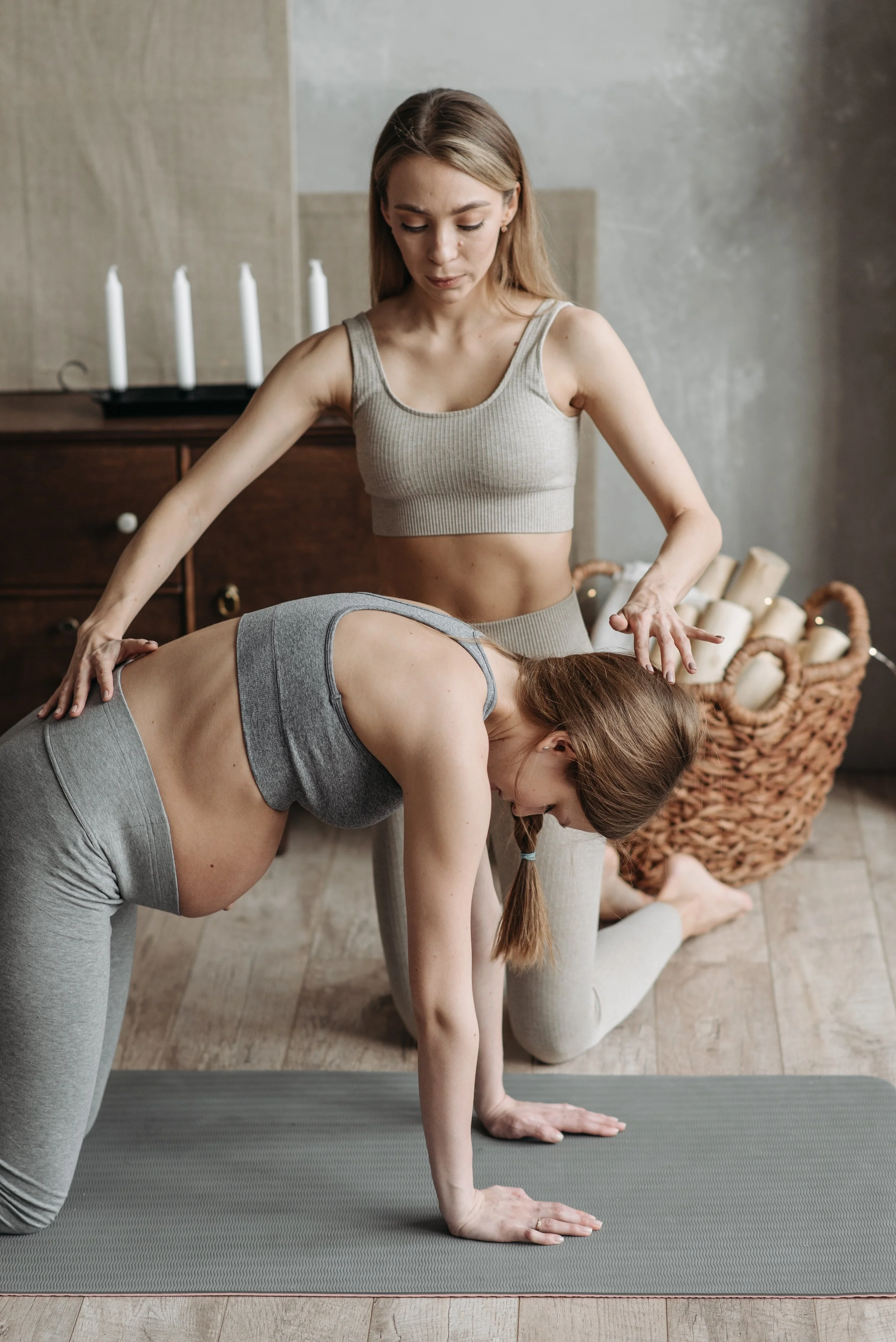
There are obvious changes that your body goes through during pregnancy and prenatal exercise takes those into account. Let’s discuss the pros and cons of prenatal exercise, as well as when to start, and how to know if the prenatal program you’re using is a good one.
Prenatal exercise programs are designed to help pregnant moms stay active during pregnancy, while also considering the safety of the baby. There are obvious changes that your body goes through during pregnancy and prenatal exercise takes those into account. Let’s discuss the pros and cons of prenatal exercise, as well as when to start, and how to know if the prenatal program you’re using is a good one.
Positives
Promotes a healthy pregnancy: Prenatal exercise can help you reduce your risk for more serious conditions like gestational diabetes and pre-eclampsia. It can also help you ease daily complaints like constipation, lack of energy, and back pain.
Improve Mental Health: Exercise during pregnancy can reduce your risk for prenatal anxiety and depression, and may even decrease your postpartum risk as well.
Prepare for labor: Outside of the physical strength, mobility and endurance benefits of exercise during pregnancy, by feeling good in your body, you’ll feel more confident going into labor.
Reduces aches/pains: By strengthening and lengthening the muscles most impacted by pregnancy, your body will move and perform better. You’ll be able to avoid some of the discomforts caused by overused muscles or compensation.
Improve sleep: Prenatal exercise can help you get a better night of sleep.
Prenatal Professionals: Instructors or trainers have an understanding of what your body is going through, which can help ease your fears around doing harm to the baby by exercising.
Social comfort: Not only do you have the camaraderie of other pregnant moms in a prenatal class, but you don’t have to worry about keeping up during a regular fitness class, and you won’t have to constantly ask for modifications.
Negatives
Potential for heat stress: Your ability to regulate temperature changes during pregnancy. Although, it is unlikely that environmental heat will raise your core temperature to a level of concern, try to avoid exercise in excessively hot/humid weather, hydrate well, and wear breathable clothing to make exercise more enjoyable.
Access: Finding the opportunity for prenatal-specific exercise might be difficult. It might be that you don’t have any prenatal classes or exercise professionals in your area. If you do, there may be a limited number of them and your schedule may not work with their schedule.
Individualization: The American College of Sports Medicine prenatal exercise guidelines suggest your program be individualized for your needs during pregnancy. However, if the only training options available are large classes, or workouts led by a trainer unfamiliar with conditions you might have (like pelvic floor dysfunction), then it might be hard to feel like your program is personalized to meet your unique needs.
When should you start?
As far as exercise in general, for most people, the benefits outweigh the risks when it comes to beginning or continuing an exercise program during pregnancy. You might be tempted to wait until you speak with your OB to make sure that exercise is safe for you during pregnancy, which means you might be waiting until you're 8 weeks pregnant. My advice would be if you have concerns or contraindications, then yes, wait until you speak with your healthcare provider. However, if you’re anxious to get started or to continue with exercise and you’ve reviewed the list of safety concerns, you can always message your primary before seeing your OB, just for the reassurance that you’re safe to exercise.
During your first trimester, you may not experience many physical changes so many people assume it is too early to start prenatal-specific exercise. However, if you take into account the hormonal and emotional changes occurring, like fatigue, or stress about whether the exercise you’re choosing is OK for you to be doing, then getting into a prenatal training program earlier rather than later would be beneficial. I also believe it’s never too early to start training the muscles that will be most impacted by pregnancy. For example, you’ll want a strong core, including pelvic floor muscles, and we all know strength gains don’t happen overnight. By starting a program that considers these things, your body will be more prepared for the physical changes to come.
How do you know if your prenatal exercise program is a good one?
When you choose a prenatal exercise program, there are a few key factors to look for. First, you should verify the instructor or trainer’s credentials. Pregnancy comes with hormonal, physical, and emotional changes and the person overseeing the program should have both the education and experience in prenatal fitness. Next, your program should be designed for the pregnant mom, not modified for the pregnant mom. A basketball player doesn’t go into an exercise class with the instructor just providing modifications because of his/her height or wanting to jump higher. Instead, the basketball player has someone designing a program that is specific to their needs. Pregnancy is no different. A prenatal fitness class should look different from your pre-pregnancy class. Strength should focus on functional movements. Core training should include breathing and pelvic floor work. Intensity should vary based on your energy level. Next, a really good prenatal exercise program should allow you to discuss concerns and trimester trends. For example, if you are suffering from pregnancy heartburn, your instructor should know that certain positions might have to be avoided, and be able to give you equally beneficial training options. Lastly, exercise should help you stay active until your due date, meaning it should be a positive addition to your life. If your prenatal program is a stressor or causes you discomfort or fatigue, then it’s not right for you.
Concerned about core strength during pregnancy? FREE DOWNLOAD.