
Active Mom Insights
Blog posts by Ashley Reid
Returning to Exercise After Covid

Are there dangers on returning to exercise post Covid? That is still something being studied, but we do know there are long term effects from Covid and because of possible complications there should be guidelines on how to return to physical activity. There is increasing evidence that “long Covid” symptoms can include cough, elevated resting heart rate, and extreme fatigue. Cardiac damage is also a concern, especially in athletes returning to sport post virus. The American College of Sports Medicine is one of the first organizations to provide guidelines based on your level of risk.
Low Risk: If you are under the age of 50 with asymptomatic or mild respiratory symptoms that resolved within seven days.
When to return to activity: Rest for at least ten days after being diagnosed. Once asymptomatic for seven days then follow a gradual return to exercise without evaluation.
How to return to activity: You should first return to normal daily routine and sleep patterns. You should be able to perform daily activities and be able to walk 500 m (.31 miles) on a flat surface without fatigue or shortness of breath. Your first workout should be light intensity for a duration of 15 minutes. If you feel your energy is as it was post covid, you can increase the duration during your next workout. It’s recommended you begin with bodyweight exercises and then progress to heavier resistance and sports. *Athletes should engage in at least two weeks of minimal exertion activity before resuming sport.

Intermediate risk: If you had symptoms or fatigue lasting for more than one week, or prolonged shortness of breath/chest pain that did not require hospitalization.
When to return to activity: it is suggested that you be evaluated with an EKG and troponin test if you have an abnormal EKG. A personalized exercise prescription is recommended.
How to return to exercise: a specialist team should create a personalized exercise prescription
High risk: if you were hospitalized or experienced shortness of breath or chest pain at rest or with basic daily activities.
When to return to activity: it is suggested that you be evaluated with an EKG and troponin test if you have an abnormal EKG.
How to return to exercise: a specialist team should create a personalized exercise prescription
A gradual return to exercise will help mitigate risk. Working with an exercise physiologist and care team is to your benefit as we continue to learn more about Covid-19 and exercise.
Below is an example of a low risk return to exercise progression. You should make sure you recover from each workout and that no new/returning symptoms occur. Contact your doctor if you experience any chest pain, irregular heartbeat or shortness of breath. This progression may take place over a 1-2 month period.
Stage 1: Mobility/Flexibility and light walking
Stage 2: Continue to build up walking intensity and duration
Stage 3: Moderate intensity aerobic exercise and bodyweight resistance training (one day of exercise interspersed with one day of recovery)
Stage 4: Moderate intensity aerobic activity and resistance training (moving up to two days of exercise and one day of recovery)
Stage 5: Attempting your baseline level of activity, ramping up intensity to moderate/vigorous.
This post is an interpretation of an article titled Safe Return to Physical Activity After Covid-19.
3 Ways to Incorporate Pelvic Floor Training into Your Strength Routine
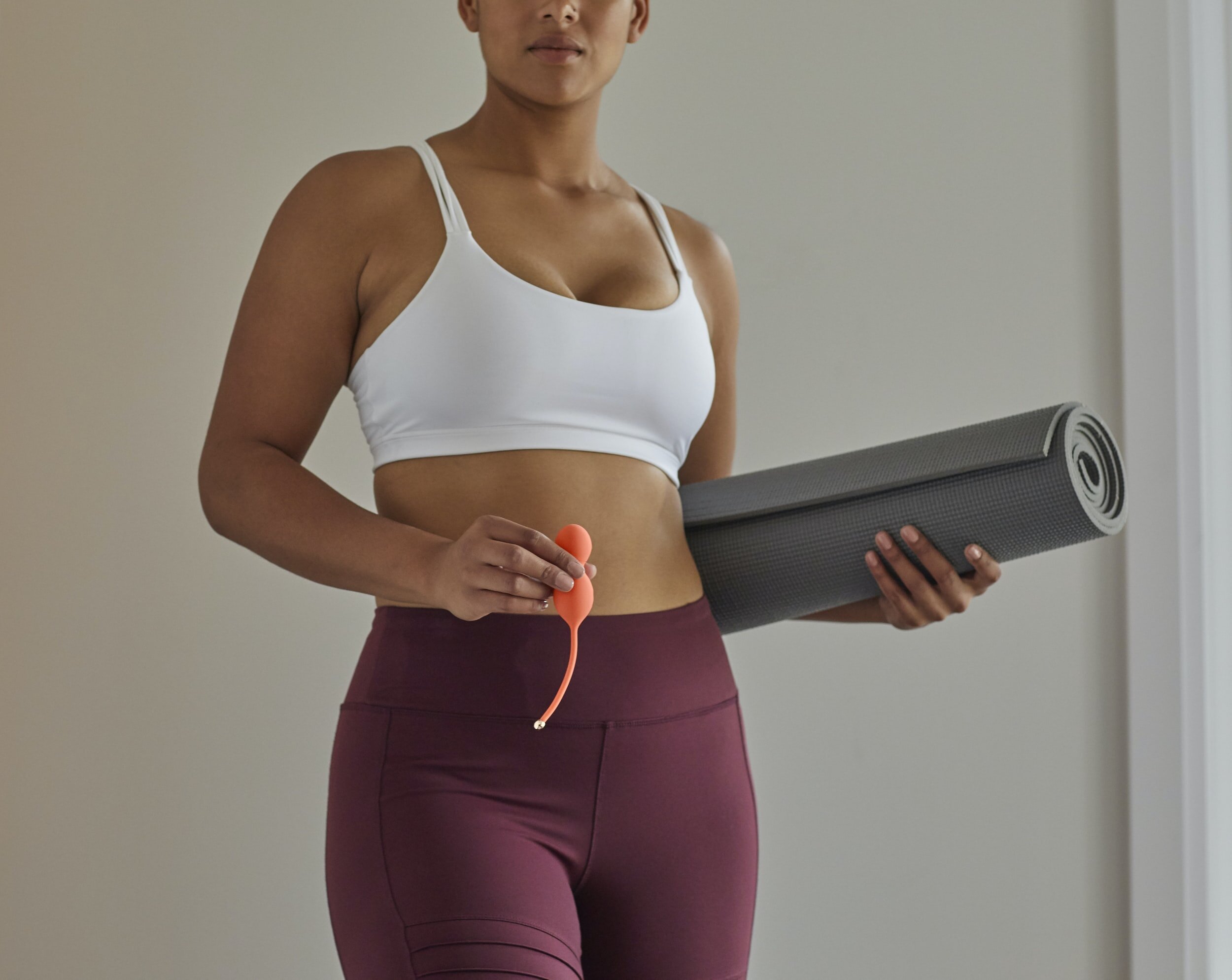
Your pelvic floor muscles can be considered the basement of your core and play a key role in managing intra-abdominal pressure (pressure within your abdominal cavity that helps stabilize your spine). When your pelvic floor muscles work with the rest of the core to manage the pressure, you'll feel stable and strong. When one area of your core is weak, your ability to manage and create pressure for stability changes. During pregnancy breathing, abdominal muscles/wall, and pelvic floor are impacted by the changes to your body-which is why training each of them properly is so important.
Pelvic floor muscles also play important roles in sexual function, organ support, and sphincteric control (holding urine, gas and poop). During the natal period (pregnancy and postpartum), weakness or overactivity of these muscles can impact your core strength and function, as well as cause conditions such as urinary and fecal incontinence, or pain with intercourse. By now most of us have heard of kegels, and some of you may even manage to fit in a few sets while brushing your teeth or driving. However, like most muscles in our body, pelvic floor muscles need to be functional during movement and not just at rest. The best way to do this is to coordinate the activation of your pelvic floor muscles with other core muscles during movement. Here are some ways to train those muscles with common exercises:

During squats: As you descend into a squat this is when your pelvic floor muscles should relax. During this lowering movement, you will inhale. As you ascend up to standing with an exhale, this is when you can contract your pelvic floor muscles (think of trying to tighten your vagina around a tampon). Additionally press through your heels to activate glutes, and draw in your belly button (to hit your transverse muscles).
During a front dumbbell raise: As you lift the dumbbell exhale and draw in your belly button (to hit your transverse muscles), while at the same time visualizing your pelvic floor rising along with your arm toward your belly button. As you lower the dumbbell, gently release your abdominal contraction and relax your pelvic floor.
Wall sit: While you're holding your wall sit (back against the wall, knees bent at 90 degrees with your knees over your ankles), challenge yourself for endurance pelvic floor contractions-one set of three 8-12 seconds long holds (make sure you’re not holding your breath, just the pelvic floor lift). And then follow that with a wall sit of quick pelvic floor contractions-strong flickers of your muscles for 10-15 reps. Think quick “contract, relax, contract, relax”. (similar to an orgasm)
For most pregnant people, pelvic floor training is recommended and will help you maintain a strong and functional core. Remember to always relax between contractions...you don’t want a tight pelvic floor during delivery.
It can be helpful for everyone to get a pelvic floor assessment postpartum, as many people will need to retrain the muscles, and although common, pelvic floor dysfunction is not normal. Weakness is not the only concern, sometimes birth trauma can lead to overactive or spasmed muscles...so don’t just jump back into kegels.
Happy training!
Ready for more tips? Download 5 Tips for a Stronger Core After Pregnancy.
If you already are experiencing back pain or leaking, consider this FREE 5-day course to gain a better understanding of how to reduce your risk for pain and incontinence.

Five Ways to Improve Your Relationship With Exercise
Exercise should be a tool to improve your mental and physical health, not something that causes feelings of failure or stress. As a mom you have limited time and energy so exercise should be something that brings you joy and positive feelings. You deserve your relationship with exercise to be a healthy one. Here are five ways to improve your relationship with exercise:
Exercise should be a tool to improve your mental and physical health, not something that causes feelings of failure or stress. As a mom you have limited time and energy so exercise should be something that brings you joy and positive feelings. You deserve your relationship with exercise to be a healthy one. Here are five ways to improve your relationship with exercise:

Drop the “No Excuses” Mentality- whether you’re pregnant, newly postpartum, a mom of a toddler or with kids in school...you’re going to have barriers to exercise. You’re going to have unexpected things get in the way of your plan to workout. With a “no excuses” mentality, you’re sure to feel bad about missing a workout. Those negative feelings are the beginning to a negative relationship with exercise. Stop. Instead work on a strategy to plan for barriers so that you don’t feel bad when they occur.
Appreciate Physical Activity-aerobic and strength training is crucial to good health and fitness, however there will be times in your life where “exercise”, which I consider a structured session of physical activity, is less feasible. However things like going for family walks, biking instead of taking the train to work, playing with your kids on the playground...are all ways to keep you active outside of a fitness class or gym. If you choose to appreciate physical activity, your relationship with exercise will seem less stressful.
Be realistic: during my consultations, I always ask what’s realistic in terms of how much time you can dedicate to exercise. Factors such as childcare, work, and child naps or help from a partner or other caregiver are always considered. Rather than choosing an arbitrary number, like “I’m going to workout 3 days per week”, ask yourself what’s realistic. This will help you avoid the frustrations of not being able to meet expectations. Personalize your fitness for a good relationship with exercise.
Join a community- for exercise to become a habit, surround yourself with people that are already doing what you’re hoping to do. Whether it be a virtual community or Facebook group, or a studio, fitness class or run group...put yourself in a place where you feel supported, motivated and understood. Your environment should be positive in order to have a positive relationship with exercise.
Find your why- your reason for exercise before pregnancy is probably different than it is now. Make a list of all of the benefits from exercise. Check yourself to make sure none of them induce negative thoughts. In other words, instead of “so I can fit in my clothes”, try “so I can play with my kids when they ask”. Eliminate any “whys” that are not positive.

Exercise for Mental Health: How Much? How often?
To meet the physical demands of pregnancy and caring for a baby exercise is essential. You'll feel stronger, more confident and be able to keep up with your kids throughout all stages of motherhood. However the mental health benefits of exercise shouldn't be forgotten. Prenatal anxiety and postpartum depression during are common. Exercise should be considered a useful tool in preventing and coping with depressive symptoms.
To meet the physical demands of pregnancy and caring for a baby exercise is essential. You'll feel stronger, and more confident and be able to keep up with your kids throughout all stages of motherhood. However, the mental health benefits of exercise shouldn't be forgotten. Prenatal anxiety and postpartum depression during are common. Exercise should be considered a useful tool in preventing and coping with depressive symptoms.
In analyzing results of over 800,000 people as it relates to mental health and exercise, researchers found that exercisers reported nearly 43% fewer mental health burdens than non-exercisers.
So what type of exercises seemed to provide the most benefit?
Popular sports
Cycling
Aerobics/Gym exercises
Yoga/Tai Chi
How Much? Now as a mom, it can be hard to find the time for exercise, but the good news is that the strongest correlation of exercise and mental health was with sessions of 30-60 minutes. I think it’s fair to say that if you’re finding it stressful to find time to exercise then the shorter end of that range is reasonable. There was no added benefit to sessions longer than 60 minutes.
What about intensity? The study found vigorous exercise was linked to better mental health outcomes, but I’d recommend monitoring your intensities and how you feel post-exercise. Often if we are already overwhelmed and stressed, recovering from high-intensity exercise can be more difficult. This is especially important to consider if you’re a new mom and not getting much sleep, or pregnant and feeling more exhausted. You may find that more moderate-intensity exercise feels better both physically and mentally.
Recommended frequency? The study found that working out 3-5 times per week was the most beneficial. If you’re a busy mom, I’d suggest aiming for 2-3 structured strength sessions per week and then filling in the other days with “physical activity” like walking, playing with your kids at the park, or structured aerobic sessions like biking or running if you have the time and energy. Remember the physical activity guidelines suggest at least 150 minutes per week to meet health guidelines.
So Mama, if you’re looking to reap not just the physical, but also the mental benefits start prioritizing fitness. Remember exercise is not a luxury, it’s a necessity. Please also remember that exercise is a tool and not the only treatment option. If you’re feeling anxious, depressed or experiencing PTSD after having a baby, you are not alone and should seek a referral from your doctor, or look into a virtual therapy company.

8 Tips For Moms Returning to Exercise Post Birth
Whether you’re a new mother who’s taking her first steps into exercise after some months away or you’ve never had a consistent fitness routine, you’ve come to the right place. Exercise for someone post-birth, with new priorities and lack of time can feel impossible. Here are some things to keep in mind and help get you started:
(guest contributor)
Whether you’re a new mother who’s taking her first steps into exercise after some months away or you’ve never had a consistent fitness routine, you’ve come to the right place. Exercise for someone post-birth, with new priorities and lack of time can feel impossible. Here are some things to keep in mind and help get you started:
1. Listen to your body
Before you take a step onto a treadmill or pick up those weights, do a self check-in and make sure you’re getting back into working out for the right reasons. How do you feel? Are you exhausted and pushing yourself too far, or are you feeling ready for some movement? After birth, your mental and physical healing and health are the most important.

2. See your doctor
Before increasing the intensity of your movement, make sure that you are healed and ask specific questions at your postpartum visit regarding pelvic floor and diastasis recti. Keep in mind that your postpartum “clearance” for exercise isn’t a green light to jump back into old routines. Consult with a postnatal expert to return to exercise in a safe and progressive way.
3. Start with walking
When you first get back to exercising, take small steps, literally. Getting out there and taking a walk will boost your ability to carve out time for exercise and identify any post-birth aches and pains that need to be addressed before anything more vigorous. You can incorporate some time with your baby as well by bringing the stroller and enjoying the great outdoors together. Equally, if you’re feeling like you need some time for yourself, it’s a great excuse to pop your headphones in and take a walk, listening to your favorite music or podcast.
4. Get planning
Whether your child is 2 months or 12, finding time to exercise can be hard. Finding a spot between naps feeds, and playtime isn’t easy. So, as much as you can, plan exercise into your existing routine. With smaller babies, you can time a walk outside or a yoga class into their nap schedule. With older babies who are in a high chair, consider getting a workout in while they eat a meal and entertain themselves. And if it’s really tricky, incorporate them into the workout by lying them on the yoga mat next to you. By making a plan, you can write it up on a wall planner to remind you throughout the day.
5. Find the right time for you
After you’ve started to do a bit of exercise, ask yourself, what time works best for you? Do you enjoy waking up an hour earlier to work out before your child wakes up? Or do you like to do it during lunchtime? When do you feel the most energetic? When are you less likely to be interrupted? Finding a time that works for you means you’re much more likely to actually get up and exercise when that time hits.
6. Consider your pelvic floor
Your pelvic floor is a group of muscles at the base of your ‘core’ muscles. Pregnancy and birth can impact these muscles in various ways. You’ll be a better exerciser with a strong core, and weak pelvic floor muscles can make exercise uncomfortable by causing pressure or even incontinence. Be sure to consult with a pelvic health physical therapist if this is a concern for you. They may recommend pelvic floor exercises before exercise, or better yet incorporated into your fitness routine.
7. Spend time outdoors
Finding activities and exercises to do outdoors is good for the body, but it’s being increasingly touted as good for the mind. Your physical and mental health is so important. Studies have shown how beneficial it is for good mental health to spend time outdoors. On a sunny day, you also have the added bonus of some free vitamin D!
8. Find workouts that you enjoy
They say if you enjoy your job, you’ll never work a day in your life. Well, the same applies to exercise. If you find a type of physical activity you enjoy, then you will look forward to moving your body and exercise. Think outside the box and consider tennis, cycling, or even rollerblading - best rollerblades for women.
Ready for more tips? Download 5 Tips for a Stronger Core After Pregnancy.

Functional Training for Moms: Pre/Postnatal Exercise Tips
And then you got pregnant, where your body is changing outside of your control...you’re moving different, feeling different and priorities are shifting. This is really where the first phase of motherhood begins, and where your exercise program should prepare you for that.
Long runs after work, trying new fitness classes with your friends, training hard five days per week, or possibly never working out a day in your life. This might have been what fitness looked like for you before pregnancy. Unless you had an injury you probably weren’t strength training a ton with function in mind, or adjusting your routine based on the stage of life you were in.

And then you got pregnant, where your body is changing outside of your control...you’re moving different, feeling different and priorities are shifting. This is really where the first phase of motherhood begins, and where your exercise program should prepare you for that. For many (unless you trained as an athlete), it's the first opportunity to really choose workouts that align with the physical and functional demands being placed on your body, as well as your stage of life.
Here are a few functional training ideas and tips for early stages of motherhood:
Pregnancy
Learn which core exercises are still appropriate for you
Be sure to include breathing and pelvic floor work in your fitness routine
Focus on lengthening chest muscles and strengthening upper back muscles
Incorporate a variety of glute exercises
Avoid impact when you start to feel pelvic pressure or incontinence during exercise
Early Postpartum (0-6 weeks)
Begin reconnecting to core muscles with breath and simple exercises like hip lifts and pelvic tilts
Adjust stroller handles to the proper height and enjoy short walking bouts if you’re feeling up to it
Focus on body mechanics while holding the baby, sitting, and feeding
Avoid impact exercise (low impact like walking is acceptable as tolerated)
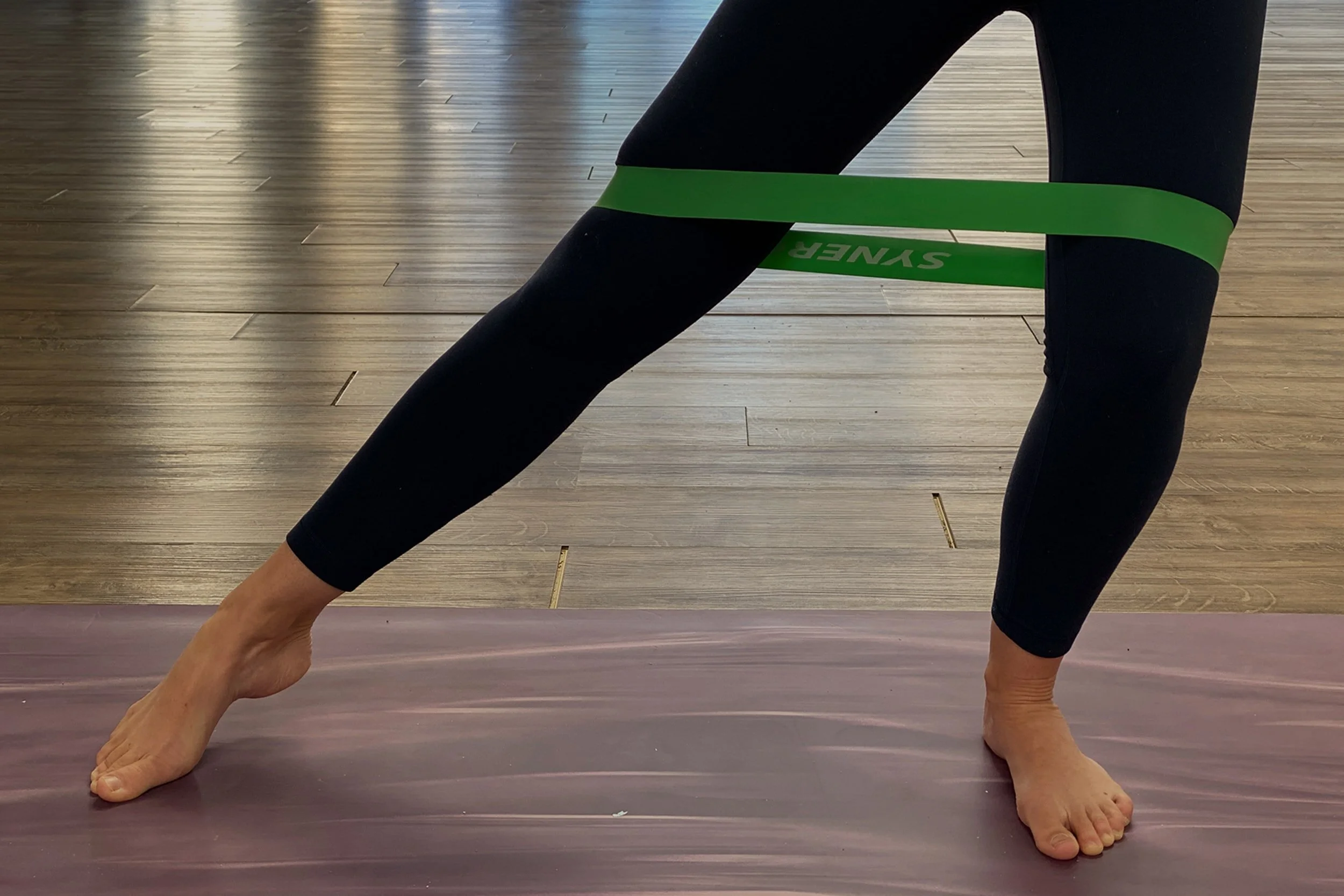
Postpartum 6-12 weeks
Increase the duration of low-impact activities (like walking) as tolerated
Address pelvic floor or diastasis recti concerns with a professional
Begin to progress through core exercises
Incorporate strength exercises like deadlifts, lunges, or box squats that mimic daily life demands
Postpartum 12 weeks-12 months
Gradually add more impact exercise if desired (and if strength training has been adequate)
Begin to increase strength training volume, focus on movement patterns (push, pull, squat, lunge, hinge, rotate)
Use more frequent, but shorter duration workouts to make consistency more attainable
Use tools like the foam roller to address mobility and muscle tightness
This is by no means an exhaustive or very specific list, but hopefully, it gives you an idea of the importance of shifting your training focus to not just meet your goals, but also your needs. If you need help personalizing your program, take advantage of the Active Mom Fitness Signature Consult.

When to Start Prenatal Exercise
The short answer: Right away!
But this also depends on what you consider prenatal exercise. Gone are the days where it has to be gentle stretching (although it could be if that’s what you need).
The short answer: Right away!
But this also depends on what you consider prenatal exercise. Gone are the days when it has to be gentle stretching (although it could be if that’s what you need). In fact, if you watch this video from Nike, you’ll probably feel pretty badass and realize prenatal exercise is going to prepare you for the athletic event that is pregnancy and labor and delivery….a marathon combined with intense sprints.

Prenatal exercise means your training program is designed for the pregnant body. You don’t have to follow a specific set of rules for each trimester. Exercise selection isn’t dictated by the number of weeks you are. A really good prenatal program, simply means you’re going to attempt to put your body in the best position to deal with the demands of pregnancy and motherhood.
Very early in your pregnancy, you may find that prenatal exercise means:

less intensity because you’re extremely fatigued
learning how to engage deep abdominal while it's still fairly easy to feel them
beginning to strengthen pelvic floor muscles
finding a prenatal exercise specialist to keep you motivated through every trimester
addressing muscle weakness or tightness that might become an issue later in pregnancy
Later in your pregnancy, prenatal exercise might mean:
finding new ways to strengthen the core without creating too much abdominal pressure
reducing impact exercise because it's uncomfortable or your pelvic floor can withstand the load
calming exercise to help keep your stress low
making adjustments like switching from pull-ups to rows or floor push-ups to wall push-ups
The above are just examples. Your prenatal program should be based on how you’re feeling, your current fitness level and what you enjoy doing. The earlier you can prep your body for the sport of motherhood, the better.
If you’re ready to start with something simple, download 5 Tips to a Stronger Core During Pregnancy.

Fitness Consistency During a Pandemic: Plan Your Workouts Like You Plan Your Meals
This year has been all about tips and tricks to stay motivated and consistent with your workouts. I’m here to offer you a new strategy, and although it won’t work for everyone, it will give you a chance to shift your perspective. The reason for writing this, came from a question I got about “how to stay motivated with fitness during a pandemic”. My first thought was…
This year has been all about tips and tricks to stay motivated and consistent with your workouts. I’m here to offer you a new strategy, and although it won’t work for everyone, it will give you a chance to shift your perspective. The reason for writing this, came from a question I got about “how to stay motivated with fitness during a pandemic”. My first thought was don’t rely on motivation. My second thought was to give yourself some grace. And then my mind went to the way we meal plan.
Indulge me...Consider your last family dinner. Did you find a recipe? Make a shopping list? Have to go to the store and then prepare a multi-step meal? Or maybe dinner was an old family favorite, made with pantry staples? If it was takeout, was it a go-to favorite, or did you scroll Grubhub searching a bit for a new spot? Maybe it was a combination meal where you bought some veggies already prepared, but fixed the main dish?

My point is that, no matter how you got that meal, the outcome was the same. You wanted a meal, and then you made it happen. My other point is that I bet you don’t always reach that outcome the same way. My assumption is that some weeks you have extra time and feel extra motivated, and those weeks you might take more time in selecting recipes and actually going to the store. Other weeks you might be short on time and do a combination of grocery delivery, meals that require no recipes, and maybe some take out.
Are you still following? Well, if you’re struggling to stay consistent with workouts, maybe you take that same approach. Maybe instead of having the same expectation for yourself each week and failing, you plan your workouts like you plan your meals. The only time I would say, the approach might not be effective is similar to if you have serious fitness goals and all you eat is takeout. That just doesn’t work. But, if your goals are a bit more flexible, then similar to how you eat, a varying weekly approach might be just what you need to stay consistent with fitness during a pandemic.
So, how do you plan your workouts like you do your meals?
Weeks that you’re short on time and energy (weeks you’re favoring take out): These are days where your workouts should be the most convenient and less intense. If walking is easiest for you, plan to do that. If jumping in your regular virtual class is best, that’s your move. Whatever it is, it should take minimal planning or thought. It also should energize you and not exhaust you, so monitor the intensity that gives you that best boost.
Note: maybe one day during this busy week you have a little extra time, so like you would search for a new take out spot, maybe this is when you add a bit of a twist to your convenient workouts. Try a new walking route or a new virtual class. Keep it convenient, but with a little bit more effort.
Weeks that you’re feeling super motivated (weeks you're searching for new recipes and taking the time to go to the store): These are the days you want to be more ambitious with your workouts. Perhaps you’re finding a new fitness studio to try or you’re adding an extra workout in that week. Maybe these are the days you’re increasing your training volume with more sets, reps or resistance. Take the overall motivation you’re feeling and roll it into fitness.
The last note is that if you operate better with more of a schedule…meaning you do your grocery shopping on the same day each week, or plan meals out ahead of time, or perhaps sticks with Meatless Mondays, Taco Tuesdays and so on…you’d probably have more success and consistency if you approached fitness that same way. You could pick one day to plan your workouts for the week (or have someone do it for you) and just stick to the script. This means you don’t even have to stay motivated, you just follow your plan.

I’m hoping you found this perspective interesting and some of you may find it a helpful strategy. I think at the very least it allows us all to realize that fitness is a lifestyle and you look beyond the short term. One day or one week isn’t going to throw off a lifestyle. By planning workouts like you do your meal, it allows you to manage the ups and downs of life during a pandemic, with a bit more flexibility and acceptance of uncertainty. If you’re on a motivation rollercoaster and feeling inconsistent in your workouts, I’d say stop resisting and see what happens if you treat your workouts like you do your meals.
Mom Posture: Why Are My Shoulders Rounded?
Catch a side view of yourself in the mirror and you might notice that your ears are slightly forward of your shoulders or that your neck is curved. It may look like you’re slouching even when standing tall, or that you have “winged scapula”. During exercise you might notice your shoulders shrug during pushing or pulling. You may have experienced a shoulder injury from instability, or suffer from headaches. You might even feel your breathing is inefficient.

Catch a side view of yourself in the mirror and you might notice that your ears are slightly forward of your shoulders or that your neck is curved. It may look like you’re slouching even when standing tall, or that you have a “winged scapula”. During exercise, you might notice your shoulders shrug during pushing or pulling. You may have experienced a shoulder injury from instability, or suffer from headaches. You might even feel your breathing is inefficient.
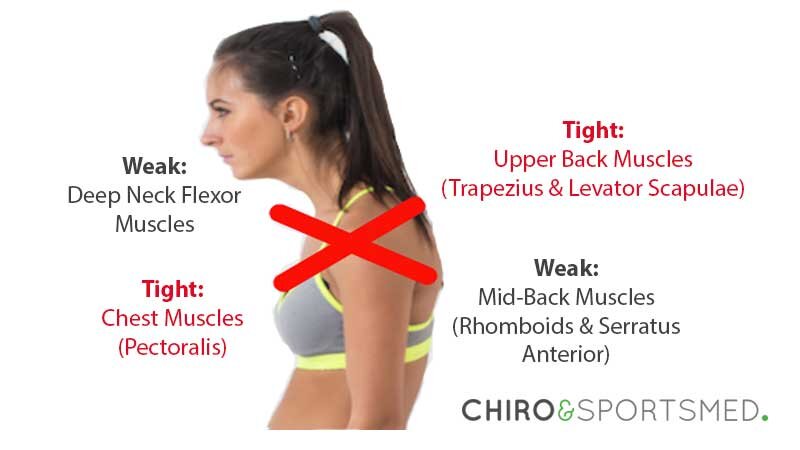
Well guess what? There is a name for that. It’s called Upper Cross Syndrome due to the X you can draw between tight and lengthened muscles in your upper body. And although it’s common among moms, we can’t just blame the kids (although heavier breasts from pregnancy or breastfeeding can contribute). Upper Cross Syndrome affects anyone that is spending extended periods of time with your head forward (think phones and computers). Put simply there is increased stress on your neck and shoulders, which can cause some muscles to be too tight and some muscles to be weak and lengthened.
The good news is that it can be improved or corrected. Here are some starting points:
Daily Life: Determine the positions during the day that are causing your upper cross syndrome and then reduce time in those positions. Feeding the baby? Change up the position. Working on your computer? Use a chair with good lumbar support, ensure the proper height of the keyboard, and take movement breaks. Moms, the daily stuff really adds up, so these small changes can have a huge impact! *Side note, consider your bra. If it’s not supportive, your breast can be pulling you forward.
Lengthen: Free up the shortened muscles that are pulling you forward. Muscles like the upper trapezius, levator scapulae, and pecs (upper back and chest) can be lengthened through dynamic and static stretching, as well as using tools like a tennis ball or foam roller. A doorway chest stretch and some upper back foam rolling is a great place to start. Stretches like ear to shoulder while also tilting your chin toward your shoulder are helpful as well.
Strengthen: Your rhomboids, serratus anterior, and lower traps (mid back), as well as your neck flexors, are probably lengthened and weak. Exercises such as standing or floor Y-raises, and chin tucks are a simple place to start.
So what do you say mama, are you ready to address what has always just been called poor posture? Find a program that works for you!
Prenatal Exercise: Your Power in Your Pregnancy
What if I told you the power you have over your pregnancy lies heavily in exercise? Or that one of the first important decisions regarding the health of you and your baby is about how much you move? What if instead of looking at it as a chore or something feared, we embraced exercise as the powerful tool it is? Hear me out...
What if I told you the power you have over your pregnancy lies heavily in exercise? Or that one of the first important decisions regarding the health of you and your baby is about how much you move? What if instead of looking at it as a chore or something feared, we embraced exercise as the powerful tool it is? Hear me out...
Awareness around the importance of prenatal exercise is increasing, and moms-to-be are encouraged more than ever before to stay active during pregnancy. Gone are the days where you hear, “put your feet up, you’re pregnant”, or that you shouldn’t start an exercise program if you weren’t exercising pre-pregnancy. Health and Exercise organizations like the American College of Sports Medicine clearly state that in most adults the benefits of exercise far outweigh the risks.

In fact, the American College of Obstetricians and Gynecologists have identified the following benefits associated with prenatal exercise:
Higher incidence of:
vaginal deliveries
Quicker postpartum recovery
Lower incidence of:
excessive weight gain
gestational diabetes
Preeclampsia (one of the most preventable causes of maternal death)
preterm birth
low birth weight babies
Let’s not forget about mental health benefits, with moms having reduced risk of prenatal anxiety and depression. If you have an uncomplicated pregnancy, it’s time to embrace moving more.
Exercise is your power during pregnancy. The 2020 ACSM guidelines recommend accumulating 150 minutes of moderate physical activity each week. If you’re new to exercise, don’t get caught up in the numbers, take the simple approach to prenatal exercise. If you prefer structure, make a plan and stick to it. Either way, exercise is meant to benefit your health and shouldn’t be a source of stress, so try this uncomplicated approach:

Walk for aerobic exercise: It can be as simple as going for short walks whenever you can and longer ones when you feel good. Consider just taking an extra 5-minute walk after parking your car at your destination. If you prefer structure, commit to a 30-minute walk every day after dinner.
Address muscle stiffness: Again, it can be as simple as recognizing where you’re feeling tight and committing to moving and stretching those areas between meetings or when you wake in the morning. You can also follow something more structured like a prenatal yoga routine. Keep in mind you may feel more stiff due to fluid retention so other strategies beyond moving could be helpful.
Strength training is key. It’s still possible to take an uncomplicated approach, but this is an area where you want to be intentional, aiming for two strength sessions per week. You can perform bodyweight exercises or use equipment like dumbbells, bands, or suspension trainers. If you’re new to exercise or short on energy and time, start with the muscles most impacted by pregnancy: core (diaphragm to the pelvic floor), glutes, and upper back/shoulders. Again, if you prefer structure, follow a full body strength routine that’s designed for pregnancy. It’s true many people can continue with their pre-pregnancy routine, but your body has new needs so to make the most of your routine, it makes sense to train to meet those changes.
Learn how to engage your pelvic floor: The simple approach is what you’ll usually find in a Google search, to kegel when you’re brushing your teeth or sitting in the car. For a more integrative approach, you can incorporate pelvic floor training into your strength routine by using breath and intentional contractions during specific exercises. Either way, remember relaxing the muscle is just as important as contracting.
In my experience as an Exercise Physiologist working with pregnant and postpartum moms, strength training is where people get held up, specifically core training. It’s usually a matter of not knowing what’s safe or what’s the most beneficial. There are no “best exercises for pregnancy” which is why it can be confusing. You really have to find what’s right for you.
If I had to give you one general tip it would be: learn how to engage your transverse abdominis muscles with breath. These are your stabilizing muscles and you can draw on their support during exercise. Being able to engage these muscles is also a good indicator on whether an abdominal exercise is appropriate for you. The question of planks often comes up during pregnancy. If you’re able to hold the tension in your abs, while continuing to breathe, without any bulging or doming in your abdomen or feeling pressure in your pelvic floor, then the exercise is probably a safe choice. Crunches and sit-ups are the only absolute “no”.
Other tips if you choose the power of prenatal exercise include:
Drink plenty of water
Eat
Wear supportive shoes and bras (so important for posture and pain)
Avoid risky activities (risk of impact to your belly or falling)
Avoid overheating (exercising in a hot environment, and wearing breathable clothes)
Lastly, keep in mind there is no one-size-fits-all all approach. Exercise should make you feel good. It should make you feel empowered. Choose what’s best for you and your baby. If you have access to a fitness professional specializing in prenatal exercise, I highly recommend consulting for a personalized program.
If you’re looking for a simple way to get started, try this download for 5 Tips for a Stronger Core During Pregnancy.
*This was an original blog post for MommiNation.