
Active Mom Insights
Blog posts by Ashley Reid

Exercise Better Than Dieting for Belly Fat Loss
Belly fat is something many of us struggle with, especially after pregnancy and going into menopause. The fat stored during pregnancy and the change in estrogen is responsible for fat distribution to your abdomen. And while watching what you eat is essential, a recent research review shows exercise may be even more effective for specifically targeting visceral fat. Visceral fat is the fat that wraps around organs deep in your abdomen. This type of fat increases your risks for things like heart disease and diabetes. So losing it is good for your health.
Belly fat is something many of us struggle with, especially after pregnancy and going into menopause. The fat stored during pregnancy and the change in estrogen is responsible for fat distribution to your abdomen. And while watching what you eat is essential, a recent research review shows exercise may be even more effective for specifically targeting visceral fat. Visceral fat is the fat that wraps around organs deep in your abdomen. This type of fat increases your risks for things like heart disease and diabetes. So losing it is good for your health.
Photo by Andres Ayrton:
In a recent research review, researchers compared how well exercise versus cutting calories reduced visceral fat in people with overweight or obesity. Researchers looked at data from 40 different studies with over 2,190 participants. Some people dieted, some exercised, and some did neither. Everyone who dieted or exercised lost visceral fat. The results showed that ONLY the exercise groups showed a dose response, where increasing exercise meant more visceral fat loss. Cutting calories did reduce visceral fat, but diet didn’t show the same dose effect. Eating fewer calories didn’t necessarily equal more fat loss. So in this case, more exercise was better than further calorie restriction.
Exercise causes fat loss via an increase in energy expenditure, while caloric restriction results in fat loss via a decrease in energy intake. Researchers theorize the results can be attributed to exercise preserving muscle while dieting alone possibly causing muscle (lean mass) loss. More muscle means you’re burning more calories at rest, so you definitely don’t want to lose muscle while attempting to rid the postpartum belly fat.
Why This Matters for Moms
Early postpartum before you’re able to do vigorous exercise, nutrition and calorie reduction might be your best tool for losing some of the stored abdominal fat from pregnancy. But, be sure to keep in mind:
adequate protein is important to prevent muscle loss (mom butt)
there are increased calorie requirements while breastfeeding, and the energy and nutrients needed for tissue healing come from a healthy diet
When you’re able to safely return to physical activity, exercise will be an important part of your fat loss plan. Rather than continuing to cut calories, you’ll increase your exercise.
Another perspective is that yes, your body does need to accumulate fat during pregnancy, but maintaining a healthy weight and not gaining excess visceral fat is also important. So more points for prenatal exercise during pregnancy!
The Takeaway
If your mommy pooch concerns you, focus on both your diet and physical activity. To better your chances of losing the fat around your abdomen, make sure that exercise is a part of your program. If the researchers’ theory is correct and losing muscle mass is responsible for the dose-effect difference between diet and exercise, make sure strength training is the foundation of your fitness program. Lastly, keep in mind that this research review was conducted on overweight and obese individuals, but did not specify if any of the participants were early postpartum or approaching menopause.
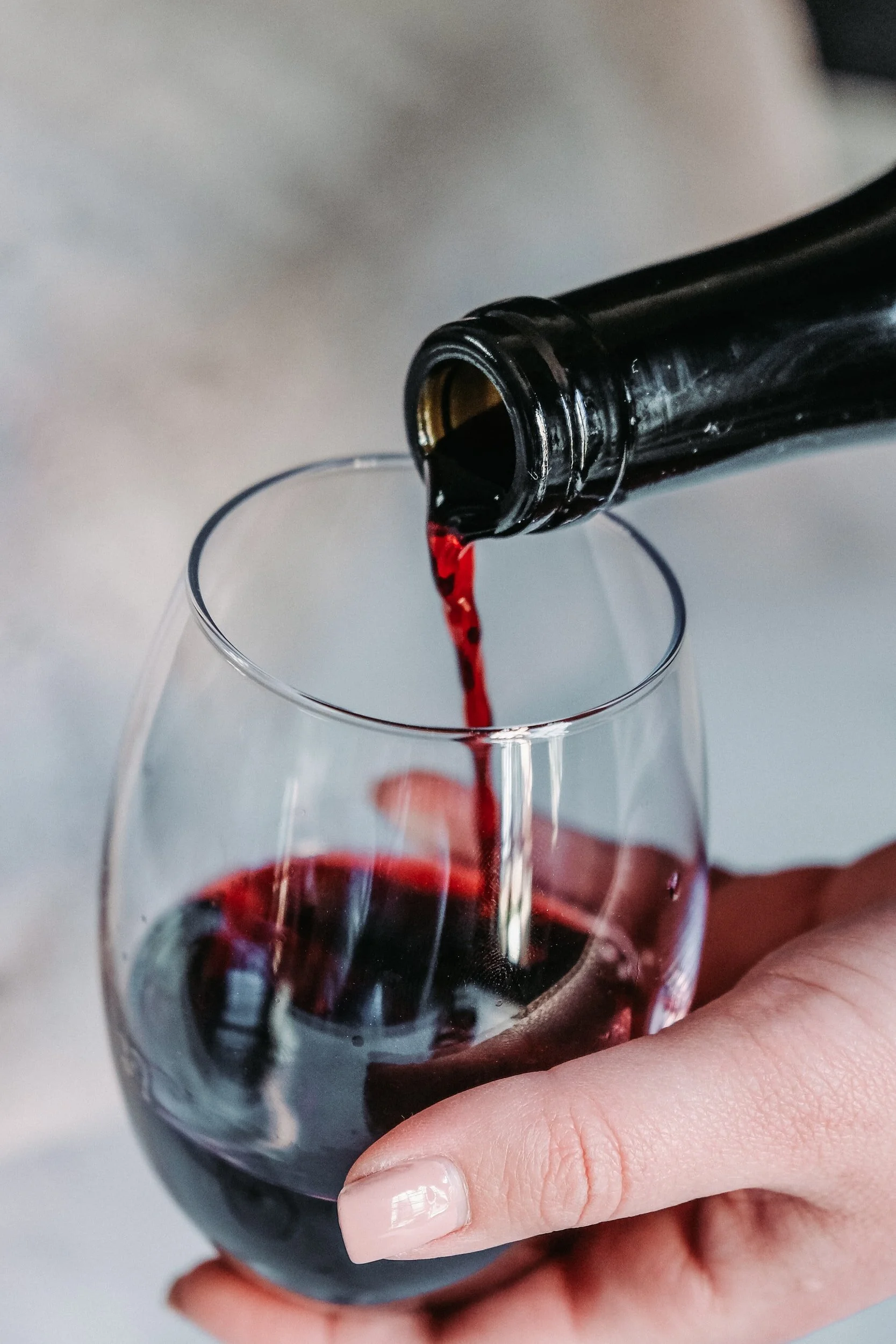
What Happens When You Give Up Weekday Wine? (Four Steps to Healthier Habits)
There’s always been this culture around moms and wine. In 2020 the culture for everyone became quarantine wine. Mom wine and quarantine wine have become part of the culture and an evening ritual for many. However before we discuss your commitment to give up week day wine, I’ll make my first point, which is: your reason for drinking wine probably isn’t as general and broad as, it’s just what moms or people in a pandemic do. So keep that in mind as you continue reading.
There’s always been this culture around moms and wine. In 2020 the culture for everyone became quarantine wine. Mom wine and quarantine wine have become part of the evening ritual for many. However before we discuss your commitment to give up week day wine, I’ll make my first point, which is: your reason for drinking wine probably isn’t as general and broad as, “it’s just what moms or people in a pandemic do”. So keep that in mind as you continue reading.
This article isn’t an opinion piece on drinking culture and really has not much to do with alcohol at all. It’s more about why we have certain habits and what happens when we try to change them. Many moms choose wine as an easy way to relax, have some me time, and escape from all the roles they maintain. Same with quarantine, what became a way to stay entertained for a couple of weeks of quarantine, turned into a routine or way to deal with stress as moved into a year of the pandemic.

Now let’s get back to the catchy headline; no drinking during the week (which is something I’ve heard from many clients as 2021 got underway). Many of you decided to drink less because you want to lose weight, improve sleep, or because you feel like this habit of daily wine has been going on too long. So what happens when you cut back on wine? I’ll give you my personal story.
I decided after the holidays that because I wasn’t moving as much, and things felt a little less festive that there was no need to keep wine in the house. Meaning I’d be eliminating the after dinner wine I would sometimes enjoy. I chose to do this because I wanted to be more conscious about unnecessary calories during more sedentary winter months. It was actually very easy for me not to buy, but what I realized is that I’d then buy occasional sweets instead (which is not something I normally do). I even bought juice, which I NEVER do. Why is this significant? Because I was basically replacing wine with something else and that something else just happened to be high in sugar. My replacement was not going to help me with my goal of watching calories. So although wine was easy for me to give up, I hadn’t addressed why I liked wine after dinner in the first place. I was just giving up one cultural habit for another...trading evening wine for evening sweets.
It was time to dig deeper and you should too. If you want to give something up, you have to figure out why you’re doing it in the first place. I came to the conclusion that wine wasn’t a stress reliever, it wasn’t an escape, it wasn’t an addiction, it wasn’t social. Wine was something I did at the end of the night that signified transition. It was where my day ended and evening began. I was in the habit of doing something to mark the change in time and maybe even give myself permission to drop most of my to-do list. When I gave up wine, I still subconsciously needed a transition and that became a sweet treat.

Once I acknowledged my need and the role the wine was playing, I was able to find a replacement I was happy with to signify that transition. This may sound cliche, but now my habit is to start to brew tea as I’m putting my daughter to bed, so that after I say goodnight I can grab my tea and take 5 minutes transitioning to evening mode. Now my replacement didn’t have to be beverage related. It could have been a workout or a bath or calling a friend or writing in a journal or finishing my last email for the day. I chose tea because it would accomplish my low cal goal and help with sleep (Trader Joe’s Well Rested tea). But the point is, if you're attempting to give up wine during the week, or change any other habit, you should first:
Identify why you’re giving up wine/habit
Identify the reason you’re drinking wine/or that particular habit
Find a direct replacement that is healthy and will accomplish the same thing
Assess whether that replacement has other benefits to solidify your decision
As I said, this article isn’t really about alcohol. If you want to give up hours of binge watching tv, you need to determine why you watch it in the first place and what you’ll do instead….or you’ll find yourself three hours in on the next Netflix trend this weekend.
Happy habit breaking!