
Active Mom Insights
Blog posts by Ashley Reid

Apply Four Blue Zone Secrets to Motherhood
For moms, living a long healthy life means seeing our kids grow up and witnessing who they become. In areas called Blue Zones, certain lifestyle habits help residents live to 90, 100, or beyond. Genetics plays a role, but researchers have found it’s our daily behaviors and environment that play a bigger role. So what can moms learn from the Blue Zones in order to live a long happy and healthy life with our children?
For moms, living a long healthy life means seeing our kids grow up and witnessing who they become. In areas called Blue Zones, certain lifestyle habits help residents live to 90, 100, or beyond. Genetics plays a role, but researchers have found it’s our daily behaviors and environment that play a bigger role. So what can moms learn from the Blue Zones in order to live a long happy and healthy life with our children?

Plant-based Isn’t a Fad
In Blue Zones people are eating minimally processed, plant-based foods like fruits, beans, vegetables, and whole grains. Note, that these are not the processed plant-based foods you find in the freezer section. Although Most Blue Zone residents aren’t vegetarians; they just eat meat less often and in smaller portions so plant foods dominate their diet.
Tips to add more plant-based foods:
Eat more plant proteins like chickpeas and lentils
Try “meatless” Mondays
Consider meat a side rather than the main portion of the dish
Make it a challenge to introduce your child to a new plant food each week
Move More
Blue Zone residents are physically active throughout daily life. They avoid long sedentary periods and can be seen gardening, or doing tai chi. In one study in the British Journal of Sports Medicine they found that for each additional 30 minutes of sedentary time on a typical day, men were 17% more likely to die during the five-year study. However, each 30 minutes of light activity reduced the odds of death by 17%. So for moms that have a hard time fitting in workouts, your daily physical activity is just as important, if not more. You can still have an extremely positive impact on your well-being without hitting the gym.
Tips for moms:
Working from home? Aim to get up between meetings to stretch or take one walking meeting each day
Get the guidance you need to stay active during pregnancy and return to exercise after having a baby.
Rather than sitting on the park bench, chase your child or push them on the swing
Distribute chores throughout your day versus all at once
Make family time active with weekend activities like hikes or biking
Eat Mindfully
People living in the Blue Zones focus not just on what they eat, but how they eat. There isn’t mindless munching on an entire bag of chips while watching TV, instead, they’re putting their fork down between bites and are intentional about how they’re eating, usually stopping when they are 80% full. Residents experience more joy from their food and tend to practice better portion control through mindful eating.
Tips for moms:
No screens during meals
Make time for meals so that you’re not rushing
Stop before you’re full
Substitute the Facebook Groups for Real groups
Close community ties help Blue Zone residents stay active and happy. Loneliness, stress, and depression can cause physical health problems. The saying, “It takes a village” isn’t just about the support we need to raise our kids. As a mom, you also need connection and support for yourself and can learn from the benefits of those living in the Blue Zones.
Tips for moms:
Arrange playdates for your kids with parents that you enjoy spending time with so that you can benefit too
Join a prenatal or postpartum fitness, or wellness group
Find a neighborhood mom to go on walks with
Limit social media scrolling and call a friend for a quick chat instead
So although we can’t all live in the Blue Zones, we can take a different approach to what it means to lead a healthy lifestyle. As we’re modeling a healthy lifestyle for our family, we can’t forget about the daily habits that have a profound impact on our lifespan and quality of life. Let’s all try to sit a little less, slow down at mealtime, connect with our village, and consider what’s on our plates.
Is Some Exercise Really Better Than No Exercise?
Unfortunately for busy moms, when life gets chaotic we tend to prioritize things other than exercise. This may result in sporadic workouts and an inconsistent routine, or possibly skipping structured workouts altogether. This leads to the question, is something better than nothing??

Well, the short answer is yes…when it comes to the health benefits of exercise, then some physical activity is absolutely better than no activity. In fact, so much so that "make exercise a lifestyle" really needs to be a priority.
In a study of 35 healthy men and women, researchers found that many of the benefits they gained during a 13-week exercise program were lost over the course of one month of cessation of the program. This included strength gains, body fat percentage, and measures of heart health. However, the most important to note is that it only took one week for participants to lose the improvements in their blood pressure and cholesterol! This indicates that to keep your cardiovascular risk factors low, you need to maintain physical activity and make it a lifestyle. So returning to the answer to the question, yes some exercise is better than being sedentary when it comes to exercise and health. Upper and lower body strength gains also decreased progressively the month after completing the program. The good news is that the study did show us that 20-30 minute resistance training workouts just 2-3 times per week was enough to see fitness improve!
If staying consistent with exercise sounds easier said than done, here are some tips on how to make fitness work for you.

Be realistic with your time and identify ways that physical activity can naturally fit into your life. If you’re up several times per night, then setting a goal to do even a 10-minute HIIT workout before the baby wakes up in the morning is probably unrealistic and completely un-motivating. However, saying that you’re going to beat the afternoon energy slump by doing a 10-minute stroller walk with the baby, is probably more manageable and something you might look forward to.
Start with the minimum. If you can get benefits from just two days per week of strength training, start there. If you don’t have a gym membership, start with at-home bodyweight exercises. If you feel weak and experience pain with exercise, start with just a few core exercises.
Hire a professional. We invest in professionals for all sorts of things…cleaners to save time with housework, going to a nail salon instead of home pedicures, and therapists to improve our mental health. But for some reason when it comes to fitness, hiring a professional can be seen as a luxury. There is nothing wrong with seeking someone to hold you accountable. There is value in having an expert design a 30-minute program that will improve your strength.
I hope this post encourages you to adopt an active lifestyle!
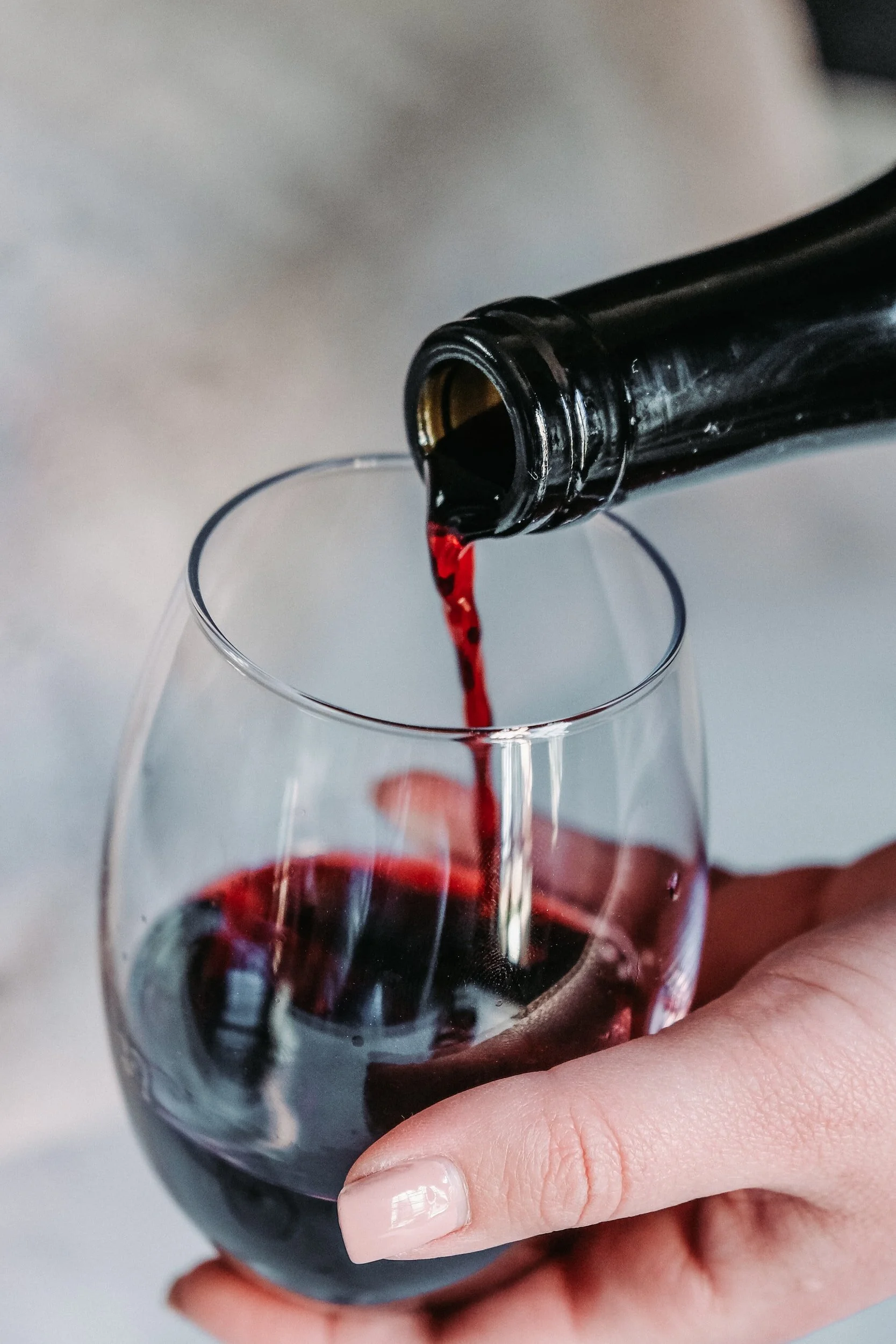
What Happens When You Give Up Weekday Wine? (Four Steps to Healthier Habits)
There’s always been this culture around moms and wine. In 2020 the culture for everyone became quarantine wine. Mom wine and quarantine wine have become part of the culture and an evening ritual for many. However before we discuss your commitment to give up week day wine, I’ll make my first point, which is: your reason for drinking wine probably isn’t as general and broad as, it’s just what moms or people in a pandemic do. So keep that in mind as you continue reading.
There’s always been this culture around moms and wine. In 2020 the culture for everyone became quarantine wine. Mom wine and quarantine wine have become part of the evening ritual for many. However before we discuss your commitment to give up week day wine, I’ll make my first point, which is: your reason for drinking wine probably isn’t as general and broad as, “it’s just what moms or people in a pandemic do”. So keep that in mind as you continue reading.
This article isn’t an opinion piece on drinking culture and really has not much to do with alcohol at all. It’s more about why we have certain habits and what happens when we try to change them. Many moms choose wine as an easy way to relax, have some me time, and escape from all the roles they maintain. Same with quarantine, what became a way to stay entertained for a couple of weeks of quarantine, turned into a routine or way to deal with stress as moved into a year of the pandemic.

Now let’s get back to the catchy headline; no drinking during the week (which is something I’ve heard from many clients as 2021 got underway). Many of you decided to drink less because you want to lose weight, improve sleep, or because you feel like this habit of daily wine has been going on too long. So what happens when you cut back on wine? I’ll give you my personal story.
I decided after the holidays that because I wasn’t moving as much, and things felt a little less festive that there was no need to keep wine in the house. Meaning I’d be eliminating the after dinner wine I would sometimes enjoy. I chose to do this because I wanted to be more conscious about unnecessary calories during more sedentary winter months. It was actually very easy for me not to buy, but what I realized is that I’d then buy occasional sweets instead (which is not something I normally do). I even bought juice, which I NEVER do. Why is this significant? Because I was basically replacing wine with something else and that something else just happened to be high in sugar. My replacement was not going to help me with my goal of watching calories. So although wine was easy for me to give up, I hadn’t addressed why I liked wine after dinner in the first place. I was just giving up one cultural habit for another...trading evening wine for evening sweets.
It was time to dig deeper and you should too. If you want to give something up, you have to figure out why you’re doing it in the first place. I came to the conclusion that wine wasn’t a stress reliever, it wasn’t an escape, it wasn’t an addiction, it wasn’t social. Wine was something I did at the end of the night that signified transition. It was where my day ended and evening began. I was in the habit of doing something to mark the change in time and maybe even give myself permission to drop most of my to-do list. When I gave up wine, I still subconsciously needed a transition and that became a sweet treat.

Once I acknowledged my need and the role the wine was playing, I was able to find a replacement I was happy with to signify that transition. This may sound cliche, but now my habit is to start to brew tea as I’m putting my daughter to bed, so that after I say goodnight I can grab my tea and take 5 minutes transitioning to evening mode. Now my replacement didn’t have to be beverage related. It could have been a workout or a bath or calling a friend or writing in a journal or finishing my last email for the day. I chose tea because it would accomplish my low cal goal and help with sleep (Trader Joe’s Well Rested tea). But the point is, if you're attempting to give up wine during the week, or change any other habit, you should first:
Identify why you’re giving up wine/habit
Identify the reason you’re drinking wine/or that particular habit
Find a direct replacement that is healthy and will accomplish the same thing
Assess whether that replacement has other benefits to solidify your decision
As I said, this article isn’t really about alcohol. If you want to give up hours of binge watching tv, you need to determine why you watch it in the first place and what you’ll do instead….or you’ll find yourself three hours in on the next Netflix trend this weekend.
Happy habit breaking!

Six Healthy Habits I'm Happy I Stuck With (Part Two)
I believe in the power of movement, nutrition and physical activity on your mental and physical health and know that it’s important to start that education and those habits young. Looking at my daughter as a six year old, understanding how to take care of her body and having the confidence to be a physically active kid really warms my heart.
I believe in the power of movement, nutrition and physical activity on your mental and physical health and know that it’s important to start that education and those habits young. Looking at my daughter as a six year old, understanding how to take care of her body and having the confidence to be a physically active kid really warms my heart :)
And that brings us to part two of the Six Healthy Habits I’m Glad I Stuck With (as a reminder this post came about after reflecting on my daughter turning six, click here for part one).

4. Eat Dinner (or one meal) Together Every Day: Experts have proven the importance of family meals, not just for nutrition, but for a child’s self esteem, academics and more. Since she was in a highchair, I made sure that if she was having dinner, I was in a chair right next to her having dinner too. I also have gone a step further, and other than when she didn’t have teeth (although I gave my best shot at baby led weaning), her and I have always eaten the exact same meal. In some ways this goes back to the idea of there shouldn’t be food “made for kids”, but I also do it because it gives her exposure to new foods, it models healthy eating without forcing it, it creates less stress for me to have to make and clean up two different meals, and it gives us an opportunity to discuss what we’re eating. Sure this means sometimes the meal is more basic than I’d like or more flavorful than what she’d like...but I always make sure to have one thing in the meal that both of us will enjoy. Where does that leave us now that she’s six...with a consistent evening routine and a lot of interesting dinner conversations. I’ll treasure these moments because I know when she’s older and gets involved in activities this may become harder.
5. Choose Vocab Carefully: I cringe when I hear the terms “good” food or “bad” food the same way I do if I hear the term “good kid” or “bad kid”. Eating ice cream shouldn’t make you feel bad or guilty and can lead to unhealthy behaviors (I’m sure many of us can relate because that was more common how we grew up). It was important for me to have her understand that a healthy diet can include all food, and that some foods should be eaten more than others. My approach was to have her understand the impact certain foods had on us. For example oranges have vitamins that help you not get sick and donuts have a lot of sugar, which can make it hard for you to sleep. Where does that leave us now? She has a sweet tooth like me so she’ll still ask for the ice cream (as the ice cream truck seems to have a permanent home on our block), but she understands when I say no to all of the items in the checkout line, that it’s because I’m looking out for her health. Although she may not be happy with not getting ice cream every time she asks, she doesn’t feel like she’s eating something bad or forbidden when we do indulge.
6. Anatomy and Physiology Lessons: Okay, I know this isn’t difficult for me given my field, but my daughter’s only six so the lessons have been pretty basic. My main goal is her having an understanding about how her body works so that when I make decisions for her health or she makes decisions on her own, it’s an informed decision and not just “because my mom is making me or told me so”. It started with very basic day to day stuff, like making sure we grab our water bottles before we leave the house because our body runs on water. Or put your hand on your chest after running around and feeling how fast your heart is pumping. It’s also using appropriate names for body parts like vagina or perhaps a bit extreme, “abrasions” instead of “boo boos”. It’s been simple to provide her with this information as we go through our day and now that she has some understanding she is very comfortable talking about all of her body parts. What impresses me the most is that she’s moved down the spectrum of behavior change from having the knowledge, to having a positive attitude about health, to now making decisions that she feels are best for her. These decisions range from going to her room to lay down when she’s feeling grumpy, to drinking more water when she is sick, to asking me which foods on her plate will give her the protein for strong muscles.

As I mentioned in part one, this is somewhat unsolicited mom advice, and what works for me, may not work for you. But, as I’m sure you know from experience, habits learned at an early age (for better or worse) tend to stick longer and are easier to adopt. So if there is something that’s important to you, a healthy habit you want your kids to always know…then keep at it. Find a way to have a healthy family.
Need help getting yourself healthy, so you can be the role model you want to be? Schedule a free phone call with me and I’ll point you in the right direction.

Six Healthy Habits I'm Happy I Stuck With (Part One)
I’m going to share with you Six Healthy Habits (2 part post) that I believe has made a difference in my daughter's health and perspective of what healthy is. This all comes from a week of reflection as she turned six...hence the 6 tips. Hopefully you can find that one of these is helpful and makes sense for you and your family. And if you don’t agree with any of them, I hope you at least enjoy the perspective that no matter how hard it is to maintain the habits when your kids are toddlers/preschoolers, it can prove to be worth it when they’re a bit older.
WARNING UNSOLICITED MOM ADVICE. I felt it important to start with that disclaimer because mom groups, social media and blogs are full of advice for you on how to be a mom and the choices you should make for your child. Now that may sound slightly cynical, but it’s not meant to. Because certainly there are times where that unsolicited advice is needed and welcomed because you learn that many of us moms are going through the same thing, that you’re not alone and that there are solutions. However the same advice can be overwhelming because similar to fitness, there is no one size fits all approach to parenting.

Camelback Mountain, Poconos
So now that I’ve given my disclaimer, I’m going to share with you Six Healthy Habits (2 part post) that I believe has made a difference in my daughter's health and perspective of what healthy is. This all comes from a week of reflection as she turned six...hence the 6 tips. Hopefully you can find that one of these is helpful and makes sense for you and your family. And if you don’t agree with any of them, I hope you at least enjoy the perspective that no matter how hard it is to maintain the habits when your kids are toddlers/preschoolers, it can prove to be worth it when they’re a bit older.
Ditch the stroller early. I can remember how long it would take to get places by having her walk instead of ride in a stroller at the age of one and two, but in the long run it was worth the pain. She saw walks as something enjoyable as she got to explore the environment around her. She saw walks as a necessity to get somewhere. She saw walks as something we can do together. So now, at the age of six one of her favorite requests is if we can go “explore the city today”. And that’s usually good for a few miles of activity for the both of us.
No Treats or Snacks. Before you gasp, we eat snacks but I’ve always been very careful as to what I labeled as “snack foods” and try to stay away from the word “treat”. I’ll explain both. Marketing would like to have us think not only are there specific foods that should be eaten between meals, but that there are also specific snacks that kids should eat. I don’t love those concepts. Instead I’d often give her leftover salmon from dinner for her afternoon snack or ice cream before dinner because I didn’t want her to think of it as a reward, but rather a food we can enjoy once in a while. Where does that leave us now that she’s six? One, we get to enjoy the occasional cookie for breakfast and its no big deal, and two, we avoid too much processed foods because she doesn’t always expect goldfish or crackers between meals.
3. Make Fitness a Family Affair. This is one that I talk about often and somewhat the basis of my business name Active Mom Fitness. To be a mom that is physically active, fit and feels good moving, well...you have to be just that, an “active mom”. And we all know how time consuming kids are, so one solution is to make some of that active or exercise time a family event. This can mean working out together, it can mean walking together, it can mean you getting in a 10 minute workout while “watching” your kid’s gymnastics class. If I removed all of the time I’ve spent exercising with or around my daughter, the amount of activity I have gotten over the years would probably decrease by at least 50%. And where does that leave her and I now? She understands the importance of activity and enjoys participating with me. As an added bonus she is confident and comfortable with physical activity.

Thanks for reading. I’m sure there are some habits that are important to you, but that you’re feeling are difficult to stay consistent with (especially when it comes to nutrition and exercise with kids). My unsolicited advice is to keep trying because it will be worth it, mama. Make sure to check out habits 4-6 in the next post.
If you like my perspective and would like me to help you manage family and fitness, contact me.