
Active Mom Insights: Pregnancy and Postpartum Exercise Blog
Research-based answers to the questions moms ask most about exercise during pregnancy, postpartum, and beyond. Written by Ashley Reid, exercise physiologist and author of Active Mom.

Do Prenatal Exercise Guidelines Provide Enough Guidance?
Aiming to daily kegels is a bit unrealistic and not super helpful for most people. However this recommendation is new to the guidelines and a very important addition. More effective than stationary and isolated exercises like kegels, is being able to incorporate both contraction and relaxation of the pelvic floor muscles during movement. I’d prefer people do this during strength training and major movement patterns because that’s when you need to be the most functional. Use kegels to teach yourself what activation of these muscles feels like, and then learn to coordinate activation with breath and movement.
Exercise during pregnancy benefits both you and your baby. It’s one of the first decisions you can make for the health of your child. Unfortunately less than 25% of moms-to-be are meeting the physical activity recommendations. The reason? Lack of guidance. Your doctor has probably encouraged you to exercise, and may have even reviewed the prenatal exercise guidelines with you. So why do so many people feel like they don’t have enough guidance to exercise? My assumption is that most moms don’t have the experience to translate the recommendations into practice. At a time when you may be worried about safety, and feel scared that you’re going to do something to harm you or the baby, a little more specificity and support implementing the guidelines can go along way. It’s not necessarily that guidelines don’t provide guidance, but rather more moms need access to professionals that can help them understand how to put them into practice. Let’s take a look and translate the American College of Sports Medicine Prenatal Exercise Guidelines a bit further so that you don’t end up in the 75+% of moms that don’t get enough activity during pregnancy.
Recommendation One: “Accumulate 150 minutes of moderate physical activity each week. Physical Activity is encouraged everyday, but should occur over a minimum of 3 days per week.”
The Breakdown: Moderate refers to intensity. There is no longer a heart rate max. limit during pregnancy. The best way to monitor intensity is to use the Borg Scale, which measures perceived exertion. A moderate intensity generally falls between 12-14 (breathing harder, but can still talk). If you were active before pregnancy, higher intensities may be appropriate, however maximum intensities for most people should be avoided. Suggesting you accumulate 150 minutes means the amount of activity can fluctuate each day, but you’re aiming to total 150.
My Take: Structured Exercise is important, but just as important is not being sedentary. Move more to make your pregnant body feel good. I’ve seen such success with strength training that I’d recommend two days of full body 30-minute strength workouts (more if you enjoy it and have energy), and walking on most other days (around 20-30 min. each day). If you like to do different forms of cardio you can supplement the walking.
Recommendation Two: “A variety of physical activities should be incorporated, both aerobic and resistance in nature, along with yoga and gentle stretching.”
The Breakdown: Aerobic is another word for cardio workouts and refers to workouts that challenge the cardio-respiratory system (walking, dancing, possibly jogging/biking). “Resistance in nature” refers to workouts that use resistance to target muscle strength (bodyweight, free weights, machines, bands, etc.). The guidelines state yoga or gentle stretching because you can usually find prenatal options, but the purpose here is to emphasize lengthening muscles that tend to get tight during pregnancy.
My Take: In terms of resistance training, rather than focusing on training specific muscle groups, emphasize training movement patterns like squats, lunges, hip hinges, push, pull and (anti) rotational movements. This will ensure you’re able to continue to move well as your body changes. The guidelines may give you the impression by using the term “gentle”, that you need to be worried about the type of mobility work you do, but even with the relaxin hormone there isn’t a ton of evidence saying that it will contribute to injury. Yoga is a great option, but for the non-yogis, a dynamic warm up before a strength session, or some targeted stretching at the end of a walk can serve the same purpose. The goal is really to keep your joints moving as they should, despite some muscles being shortened due to the changes in your body while pregnant….hips are usually an area that feels tight for pregnant moms.
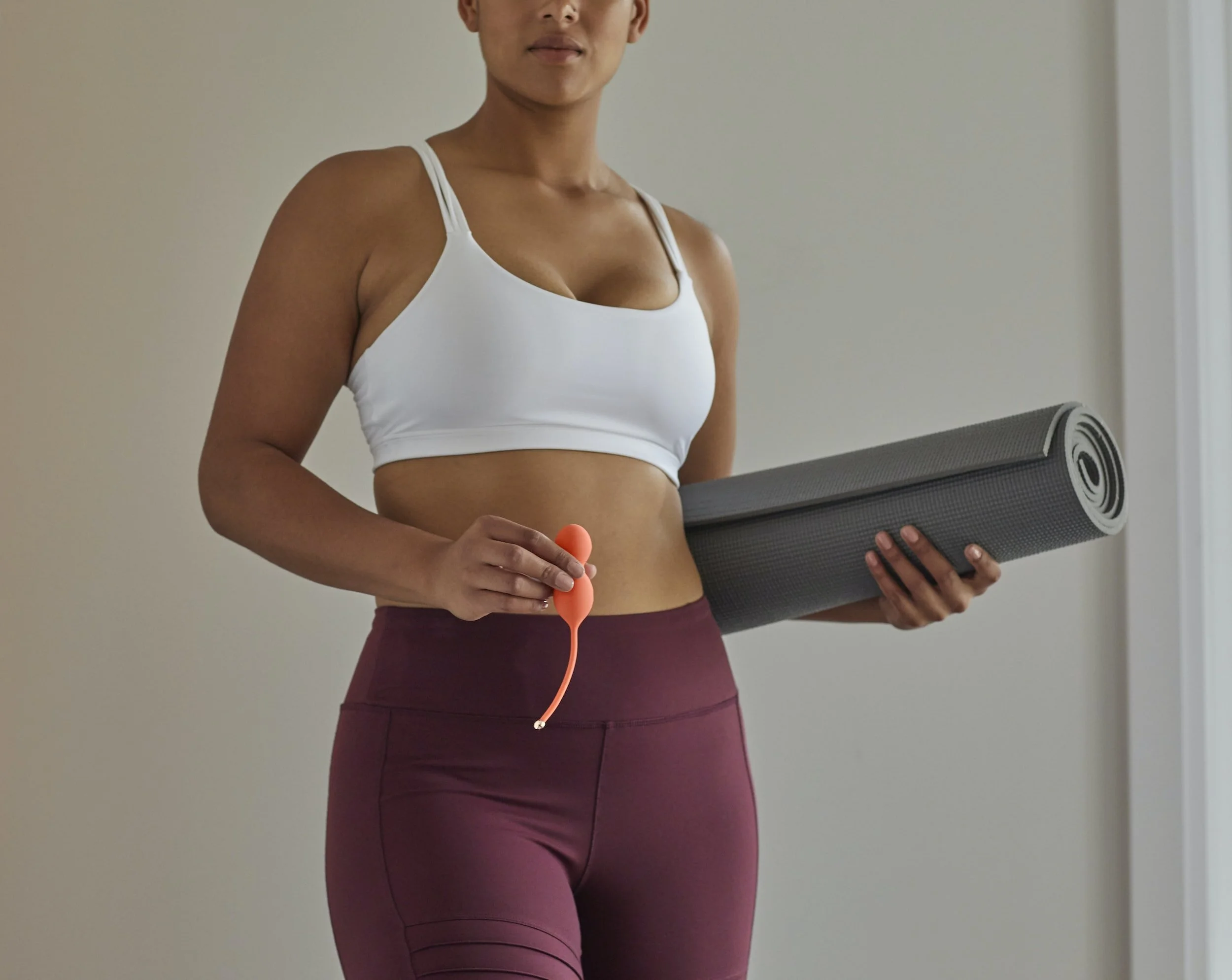
Recommendation Three: “Pelvic Floor related exercises (e.g., Kegels) should be performed daily”
The Breakdown:Your pelvic floor muscles are impacted both by hormones, change in function of abdominal muscles, changed breathing, and weight of the baby. Unfortunately most people don’t know much about the pelvic floor until pregnancy, and usually when they experience incontinence. Your pelvic floor muscles can be considered the basement of your core, so to have a functional and strong core during pregnancy, training these muscles can’t be ignored.
My Take: Aiming to daily kegels is a bit unrealistic and not super helpful for most people. However this recommendation is new to the guidelines and a very important addition. More effective than stationary and isolated exercises like kegels, is being able to incorporate both contraction and relaxation of the pelvic floor muscles during movement. I’d prefer people do this during strength training and major movement patterns because that’s when you need to be the most functional. Use kegels to teach yourself what activation of these muscles feels like, and then learn to coordinate activation with breath and movement.
Recommendation Four: “Warm-up and cool-down periods should be included in any Physical Activity regimen”
The Breakdown: Think of a warm-up and cool-down as transition periods. The warm-up should prepare your body for the type of exercise you’re going to do, and the cool-down should help you return to a resting state after working out.
My Take: Your body’s cardiovascular system changes quite a bit during pregnancy. The higher blood volume can mean a higher heart rate. A warm-up and cool-down can help you gradually increase and decrease your heart and respiratory rates, so for those of you that didn’t make much time for that before, you may find it more beneficial during pregnancy. However, you don’t necessarily need a specific routine. If you’re going for a brisk walk, your warm-up might mean starting slow and gradually increasing your pace. If you’re working out first thing in the morning, it might mean a longer period of mobilizing areas that tend to get tight during pregnancy, like back and hips. Your warm-up should mimic your workout and your cool-down should be to bring your body closer to a relaxed, resting state.
Recommendation Five: “Physical Activity programs should be individualized for each woman based on situation, experience, and current health status”
The Breakdown: Avoid any one-size-fits-all fitness advice. Factors like exercise history, pregnancy complications, access to equipment, energy level, and ability to perform strength exercises with good form…it all should be considered in workout selection or program design.
My Take: In reality, fitness should always be individualized, but it’s unrealistic to think everyone can have access to a fitness professional that can customize your program. However, if there is anytime to be thoughtful about exercise, it’s during pregnancy. Exercise can be your most powerful tool in combatting the aches and pains of pregnancy, and feeling strong and confident. Take some time to self-assess your needs and abilities. Don’t get caught up in the internet rabbit hole of Do’s and Don’ts, or best exercises for each trimester. Don’t overcomplicate things. If you aren’t able to seek the support of a prenatal exercise specialist, keep it simple: Walk often, hit the major movement patterns twice per week incorporating pelvic floor work, and stay mobile.
Hopefully, this breakdown has eased some anxiety and motivate you to exercise during pregnancy. Continue to follow this blog for tips or @activemomfitness on Instagram.
Is Some Exercise Really Better Than No Exercise?
Unfortunately for busy moms, when life gets chaotic we tend to prioritize things other than exercise. This may result in sporadic workouts and an inconsistent routine, or possibly skipping structured workouts altogether. This leads to the question, is something better than nothing??

Well, the short answer is yes…when it comes to the health benefits of exercise, then some physical activity is absolutely better than no activity. In fact, so much so that "make exercise a lifestyle" really needs to be a priority.
In a study of 35 healthy men and women, researchers found that many of the benefits they gained during a 13-week exercise program were lost over the course of one month of cessation of the program. This included strength gains, body fat percentage, and measures of heart health. However, the most important to note is that it only took one week for participants to lose the improvements in their blood pressure and cholesterol! This indicates that to keep your cardiovascular risk factors low, you need to maintain physical activity and make it a lifestyle. So returning to the answer to the question, yes some exercise is better than being sedentary when it comes to exercise and health. Upper and lower body strength gains also decreased progressively the month after completing the program. The good news is that the study did show us that 20-30 minute resistance training workouts just 2-3 times per week was enough to see fitness improve!
If staying consistent with exercise sounds easier said than done, here are some tips on how to make fitness work for you.

Be realistic with your time and identify ways that physical activity can naturally fit into your life. If you’re up several times per night, then setting a goal to do even a 10-minute HIIT workout before the baby wakes up in the morning is probably unrealistic and completely un-motivating. However, saying that you’re going to beat the afternoon energy slump by doing a 10-minute stroller walk with the baby, is probably more manageable and something you might look forward to.
Start with the minimum. If you can get benefits from just two days per week of strength training, start there. If you don’t have a gym membership, start with at-home bodyweight exercises. If you feel weak and experience pain with exercise, start with just a few core exercises.
Hire a professional. We invest in professionals for all sorts of things…cleaners to save time with housework, going to a nail salon instead of home pedicures, and therapists to improve our mental health. But for some reason when it comes to fitness, hiring a professional can be seen as a luxury. There is nothing wrong with seeking someone to hold you accountable. There is value in having an expert design a 30-minute program that will improve your strength.
I hope this post encourages you to adopt an active lifestyle!