
Active Mom Insights
Blog posts by Ashley Reid
Five Tips To Raise a Physically Active Child
Family hikes, holiday 5Ks, vacation swims, and weekend bike rides. Many of us have that vision of being a strong and healthy mom so that we can enjoy those activities with our kids. So how do we create the active family lifestyle we dream of? The truth is that it starts early, and it starts with you. Here are a few tips I’ve discovered in my professional and personal journey to encourage physical activity in kids and my daughter:

Speak positively about your body and your physical ability: Comment on what you’re good at. Don’t equate body positivity with perfection. Set a good example of appreciating what your body can do physically. They’re always listening.
Do home workouts: Honestly to get a full workout in with your kids in the room can be frustrating and can take years to get to a point with no interruption, but it’s well worth the effort. Model prioritizing your health and fitness and eventually they’ll be your biggest cheer leader, or better yet, they’ll join you!
Give them space at the playground: It’s easy to worry about their safety as they’re learning to climb and run, but it’s important for them to build confidence in their own abilities. To be a physically active “big kid”, they have to learn to trust their bodies at an early age. Rather than telling them “be careful”, ask them if they feel safe, or comment on the slippery surface and ask them if they feel comfortable they won’t slip.
Educate and complement: Don’t wait for health class. Use meal time or trips to the playground to educate them. For example: “your bones are going to get stronger with all of that jumping”, “your heart is going to be healthy with all that running” Make connections for them that their personal actions are responsible for their health.
Play the games: it can be oh so nice when your kids reach the age of playing independently, but on occasion it’s important to get out there with them. Hopscotch, swing pushing and tag may not be your dream family bike trip, but you have to start somewhere. Make those activities enjoyable now and they’ll be receptive to your ideas later. Make it about the fun and not about the exercise/activity.
Being physically active as a family is great for physical/emotional health, fun and bonding. Put these strategies to work and you’ll be running a Turkey Trot with your 7 year old in no time.
3 Exciting Games to Give Your Kids a Workout (and you too!)
(guest contributor)
As a parent, your child’s health and happiness are always your main concern, which is why it’s important that you teach them the importance of exercise from a young age. However, a lot of parents have trouble balancing family and exercise and they don’t know how to get their kids excited about staying active. Not every child is going to love structured “workouts/exercise”. But most will love playing games, and they will be way more engaged. There are some great active games you can try that will get them outside and moving around, so they can stay healthy (and you can move with them!).
Here are some active games to help your kids get more exercise. Get out there and have fun!

Scavenger Hunts
Scavenger hunts are always a great way to get your kids moving, and it’s a great option if you want a fun activity to keep them busy at home. All you need to do is hide some items around the house or yard, and challenge your kids to find them. Give them a few clues to get them started and they’ll soon be running around all over the place. If you want to turn it into a workout in disguise, you can put tasks with each item, like do 10 jumping jacks, for example.
Bean Bag Toss
Bean bag toss isn’t the first thing that comes to mind when you are thinking of fitness games, but it’s actually very beneficial. It improves hand-eye coordination and there is a bit of cardio involved as your child runs back and forth to collect their bean bags. This article that answers questions like, how far apart are the boards in bean bag toss, will help you set up your own game in the yard or park. It’s a great way to spend an afternoon and it’s also fun for parties too. Your kids will have so much fun and they won’t even realize they are exercising.
Capture The Flag
Capture the flag is a fun way to get your kids running around and get their heart rate up. It’s a simple game you can play with two to four teams of any size, and a few items to use as flags (they don’t need to be actual flags). Set up the flags and assign a base for each team. The aim is then to catch the other team's flag without being tagged. If you want to add an extra element of fitness, you can have the kids do some frog jumpss each time they get tagged before returning to their base and rejoining the game, or change the movement from running to base to skipping. You can have endless hours of fun with this one and it can be played anywhere, but it’s particularly good in a large open space, so it’s perfect for the park.
Getting kids to exercise can be a battle against toys and screens, but if you play these exciting games with them, you can get them to do a workout without even realizing it. And I’ll add once again, you get your workout in too!
3 Ways to Incorporate Pelvic Floor Training into Your Strength Routine
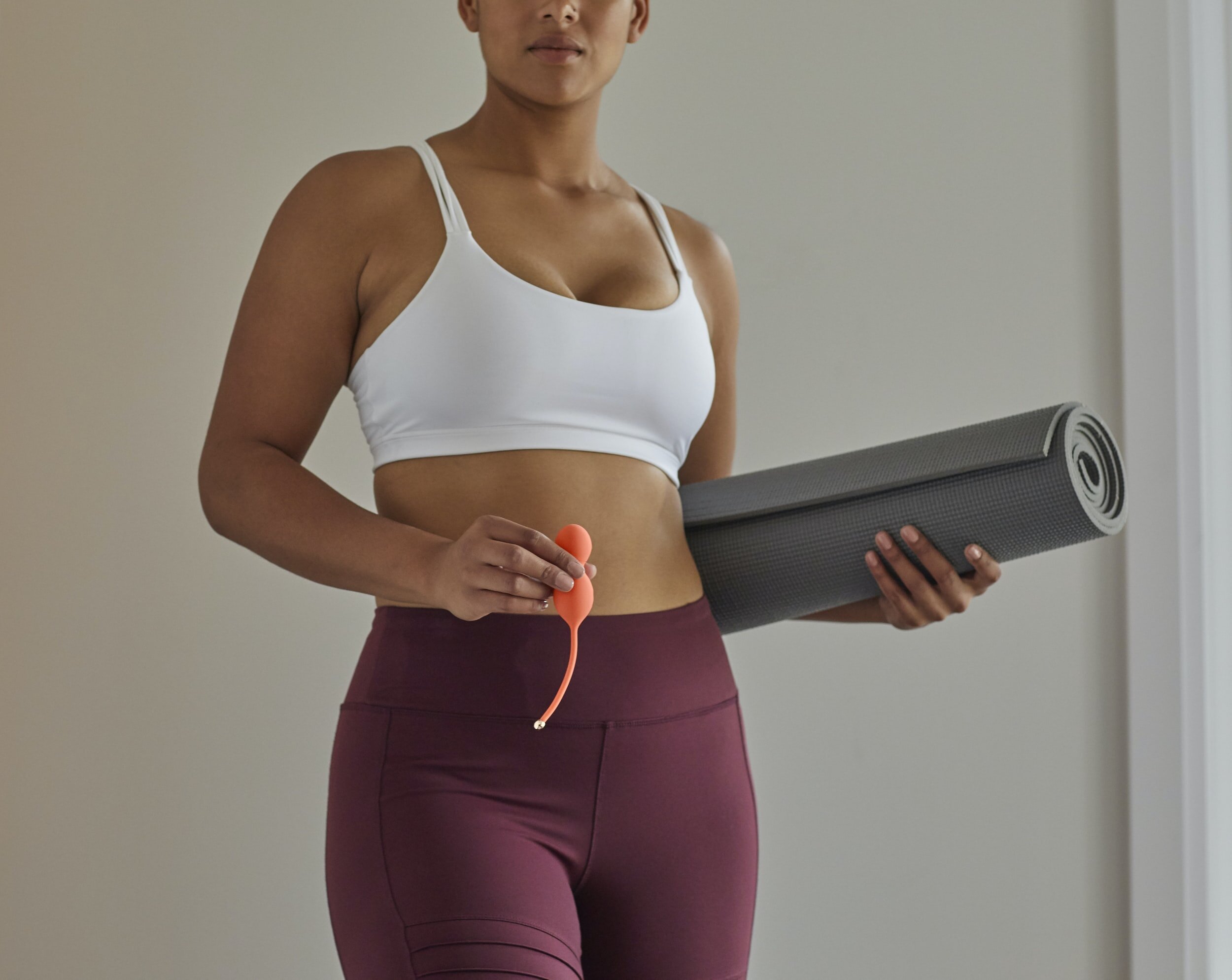
Your pelvic floor muscles can be considered the basement of your core and play a key role in managing intra-abdominal pressure (pressure within your abdominal cavity that helps stabilize your spine). When your pelvic floor muscles work with the rest of the core to manage the pressure, you'll feel stable and strong. When one area of your core is weak, your ability to manage and create pressure for stability changes. During pregnancy breathing, abdominal muscles/wall, and pelvic floor are impacted by the changes to your body-which is why training each of them properly is so important.
Pelvic floor muscles also play important roles in sexual function, organ support, and sphincteric control (holding urine, gas and poop). During the natal period (pregnancy and postpartum), weakness or overactivity of these muscles can impact your core strength and function, as well as cause conditions such as urinary and fecal incontinence, or pain with intercourse. By now most of us have heard of kegels, and some of you may even manage to fit in a few sets while brushing your teeth or driving. However, like most muscles in our body, pelvic floor muscles need to be functional during movement and not just at rest. The best way to do this is to coordinate the activation of your pelvic floor muscles with other core muscles during movement. Here are some ways to train those muscles with common exercises:

During squats: As you descend into a squat this is when your pelvic floor muscles should relax. During this lowering movement, you will inhale. As you ascend up to standing with an exhale, this is when you can contract your pelvic floor muscles (think of trying to tighten your vagina around a tampon). Additionally press through your heels to activate glutes, and draw in your belly button (to hit your transverse muscles).
During a front dumbbell raise: As you lift the dumbbell exhale and draw in your belly button (to hit your transverse muscles), while at the same time visualizing your pelvic floor rising along with your arm toward your belly button. As you lower the dumbbell, gently release your abdominal contraction and relax your pelvic floor.
Wall sit: While you're holding your wall sit (back against the wall, knees bent at 90 degrees with your knees over your ankles), challenge yourself for endurance pelvic floor contractions-one set of three 8-12 seconds long holds (make sure you’re not holding your breath, just the pelvic floor lift). And then follow that with a wall sit of quick pelvic floor contractions-strong flickers of your muscles for 10-15 reps. Think quick “contract, relax, contract, relax”. (similar to an orgasm)
For most pregnant people, pelvic floor training is recommended and will help you maintain a strong and functional core. Remember to always relax between contractions...you don’t want a tight pelvic floor during delivery.
It can be helpful for everyone to get a pelvic floor assessment postpartum, as many people will need to retrain the muscles, and although common, pelvic floor dysfunction is not normal. Weakness is not the only concern, sometimes birth trauma can lead to overactive or spasmed muscles...so don’t just jump back into kegels.
Happy training!
Ready for more tips? Download 5 Tips for a Stronger Core After Pregnancy.
If you already are experiencing back pain or leaking, consider this FREE 5-day course to gain a better understanding of how to reduce your risk for pain and incontinence.

Five Ways to Improve Your Relationship With Exercise
Exercise should be a tool to improve your mental and physical health, not something that causes feelings of failure or stress. As a mom you have limited time and energy so exercise should be something that brings you joy and positive feelings. You deserve your relationship with exercise to be a healthy one. Here are five ways to improve your relationship with exercise:
Exercise should be a tool to improve your mental and physical health, not something that causes feelings of failure or stress. As a mom you have limited time and energy so exercise should be something that brings you joy and positive feelings. You deserve your relationship with exercise to be a healthy one. Here are five ways to improve your relationship with exercise:

Drop the “No Excuses” Mentality- whether you’re pregnant, newly postpartum, a mom of a toddler or with kids in school...you’re going to have barriers to exercise. You’re going to have unexpected things get in the way of your plan to workout. With a “no excuses” mentality, you’re sure to feel bad about missing a workout. Those negative feelings are the beginning to a negative relationship with exercise. Stop. Instead work on a strategy to plan for barriers so that you don’t feel bad when they occur.
Appreciate Physical Activity-aerobic and strength training is crucial to good health and fitness, however there will be times in your life where “exercise”, which I consider a structured session of physical activity, is less feasible. However things like going for family walks, biking instead of taking the train to work, playing with your kids on the playground...are all ways to keep you active outside of a fitness class or gym. If you choose to appreciate physical activity, your relationship with exercise will seem less stressful.
Be realistic: during my consultations, I always ask what’s realistic in terms of how much time you can dedicate to exercise. Factors such as childcare, work, and child naps or help from a partner or other caregiver are always considered. Rather than choosing an arbitrary number, like “I’m going to workout 3 days per week”, ask yourself what’s realistic. This will help you avoid the frustrations of not being able to meet expectations. Personalize your fitness for a good relationship with exercise.
Join a community- for exercise to become a habit, surround yourself with people that are already doing what you’re hoping to do. Whether it be a virtual community or Facebook group, or a studio, fitness class or run group...put yourself in a place where you feel supported, motivated and understood. Your environment should be positive in order to have a positive relationship with exercise.
Find your why- your reason for exercise before pregnancy is probably different than it is now. Make a list of all of the benefits from exercise. Check yourself to make sure none of them induce negative thoughts. In other words, instead of “so I can fit in my clothes”, try “so I can play with my kids when they ask”. Eliminate any “whys” that are not positive.